
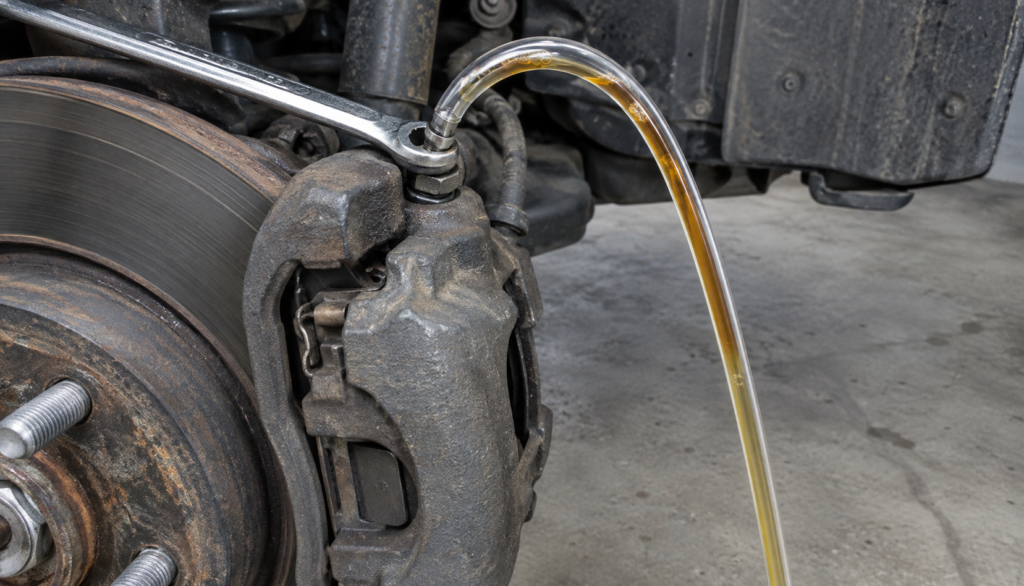
How to Bleed Brakes on a 2009 Silverado 2500HD
A spongy pedal on a 2009 Silverado 2500HD usually means air in the lines. Here is the correct bleeding sequence, the tools you need, and the mistakes that leave the pedal soft.
A spongy pedal on a 2009 Silverado 2500HD usually means air in the lines. Here is the correct bleeding sequence, the tools you need, and the mistakes that leave the pedal soft.
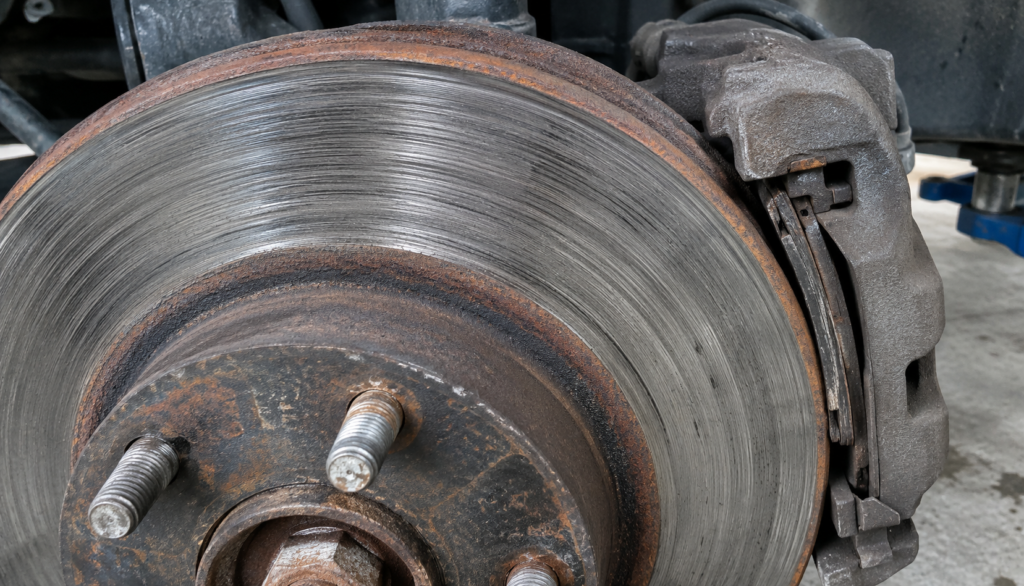
Brakes grinding usually means the pads are worn down to metal. Here’s what causes it, how to check it yourself, and when it’s time to call a mechanic.
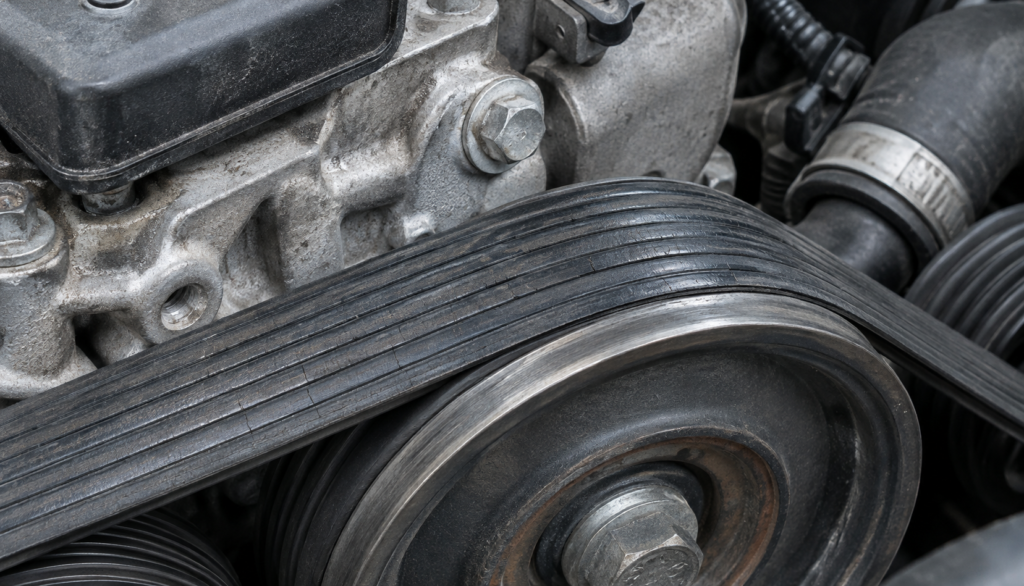
A squeak that stays the same when you press the brake pedal usually points to the serpentine belt, a wheel bearing, the suspension, or the steering. Learn how to tell them apart, what each repair costs, and when to see a mechanic.
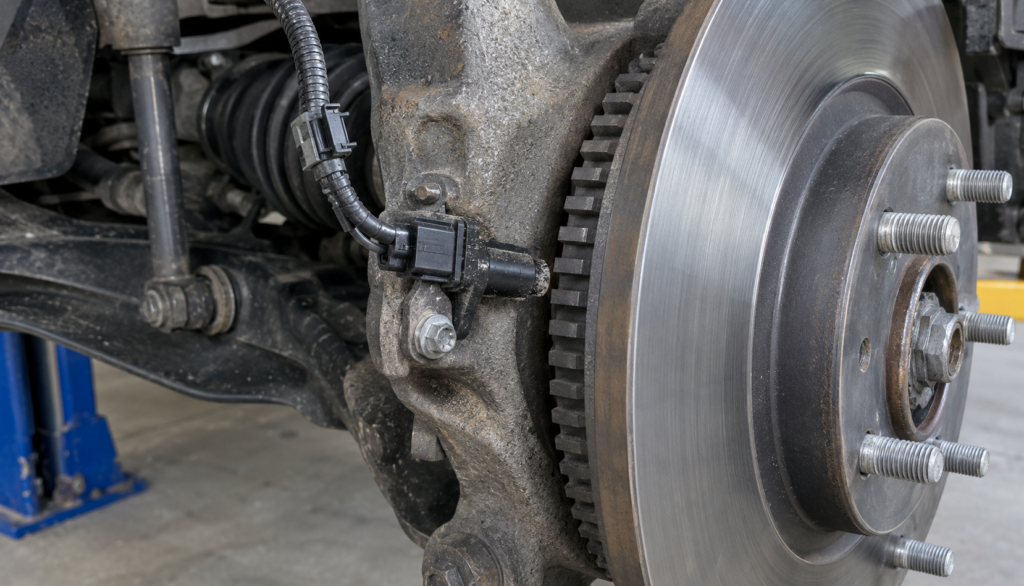
The ABS light usually points to a bad wheel speed sensor, a blown fuse, or low brake fluid. Here are the causes, repair costs, and warning signs.
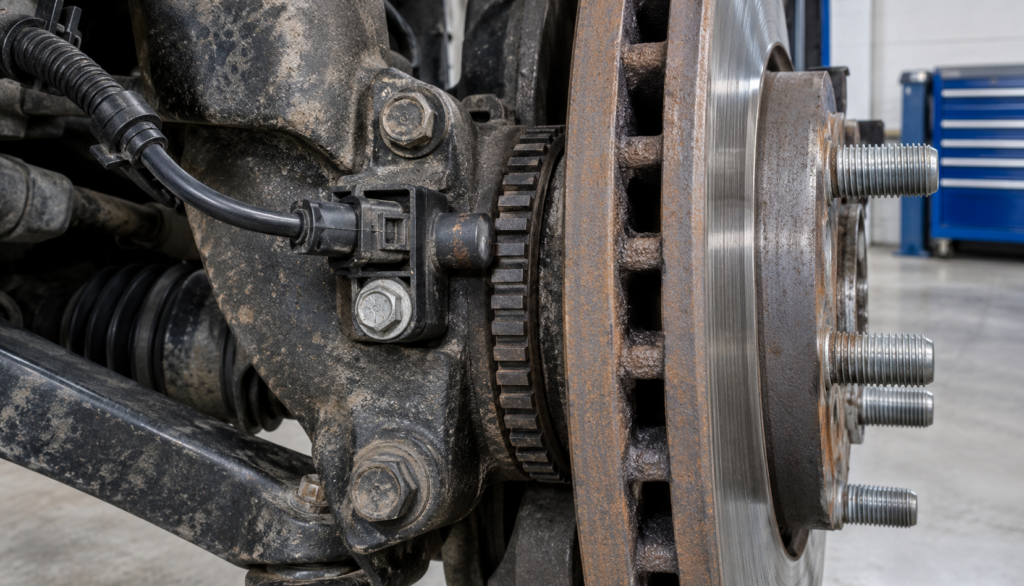
When the ABS and traction control lights come on together, a shared sensor, fuse, or battery problem is usually to blame. Learn what it means and what it costs.
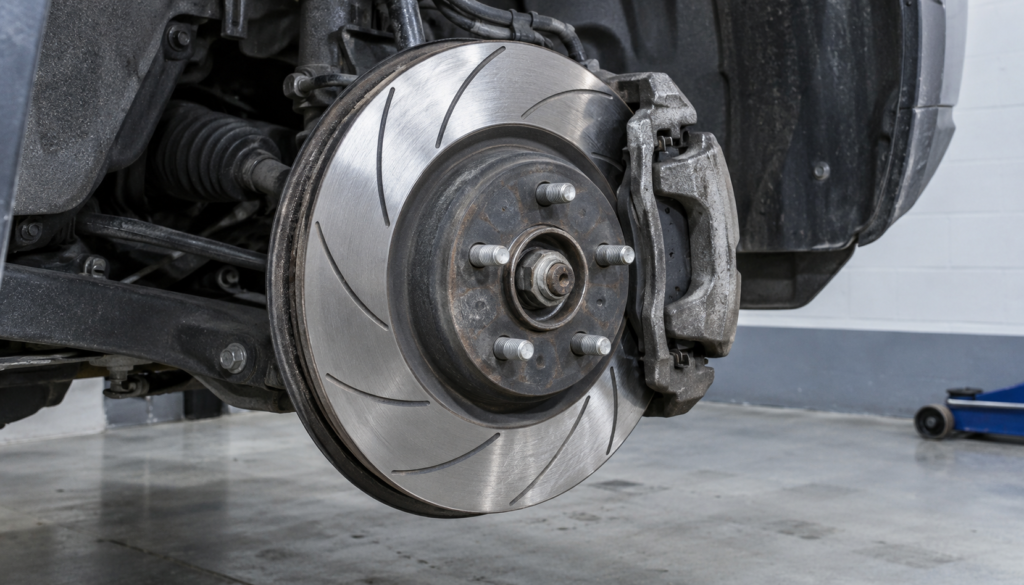
Slotted brake rotors clear gas, water, and debris from the pad surface, but they also add pad wear and some noise. Here is how they work, which specs to check, and who actually benefits.
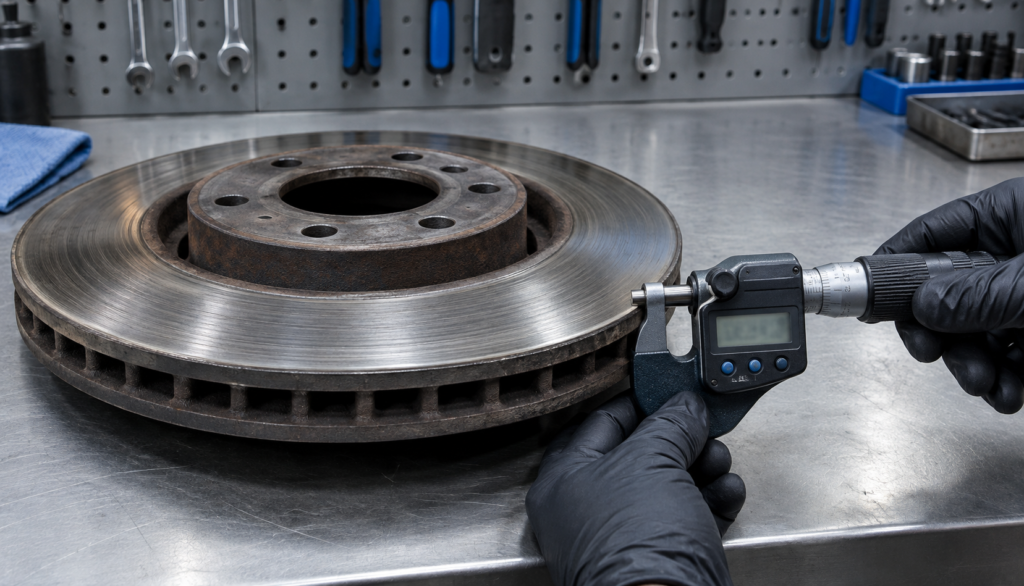
Most brake rotors last 30,000 to 70,000 miles, but driving habits, pad type, and climate can shift that a lot. Learn what to expect and how to spot a worn rotor.
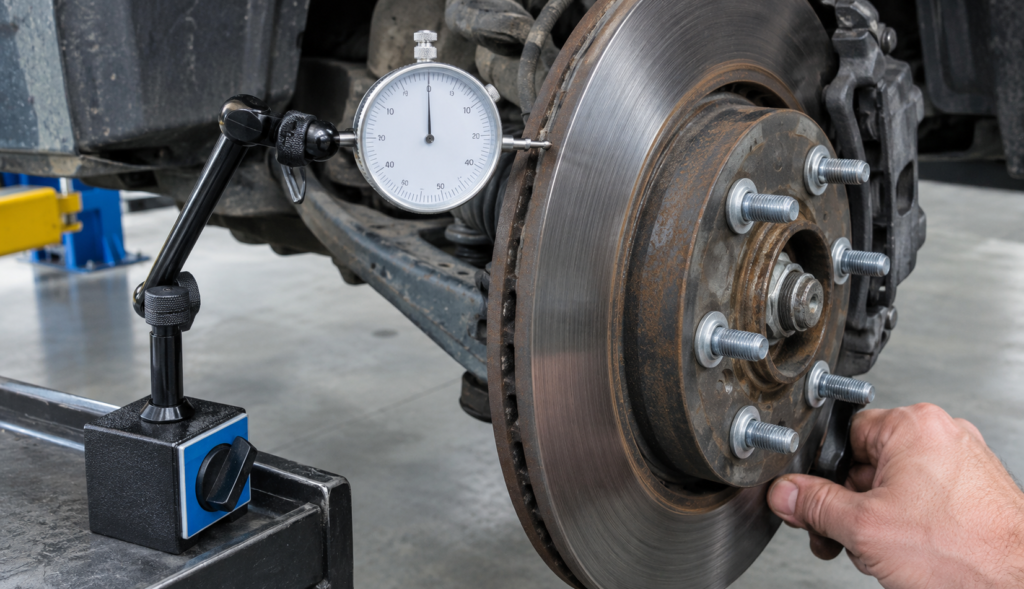
A brake rotor inspection takes about fifteen minutes and tells you whether your rotors are fine, worth resurfacing, or unsafe. Here is what to look for, how to measure it, and which findings mean replacement.
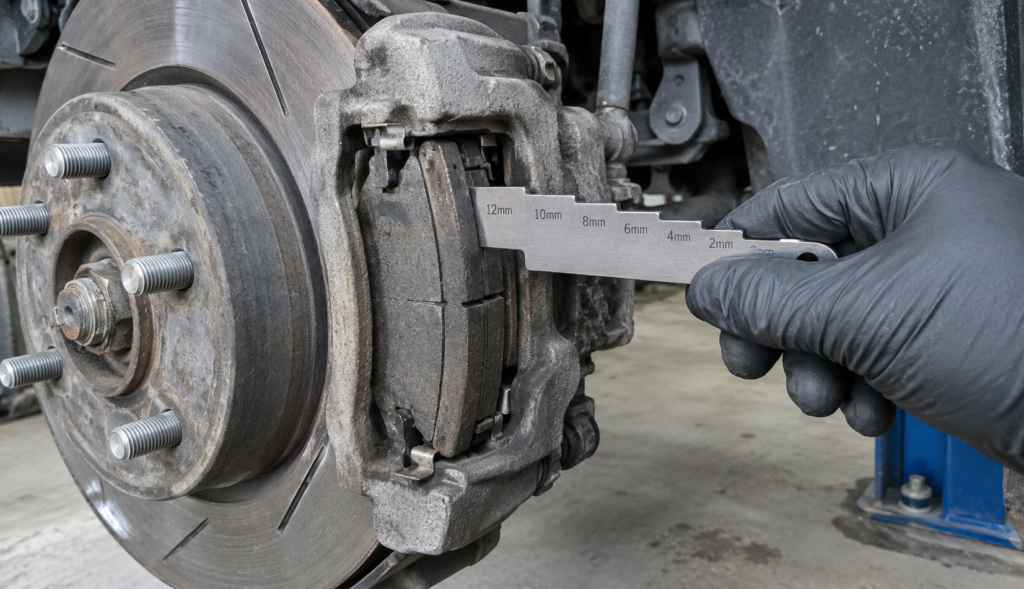
New brake pads start around 10–12 mm, and most shops replace them at 3 mm. Here’s the thickness chart, how to measure it, and what the numbers mean.
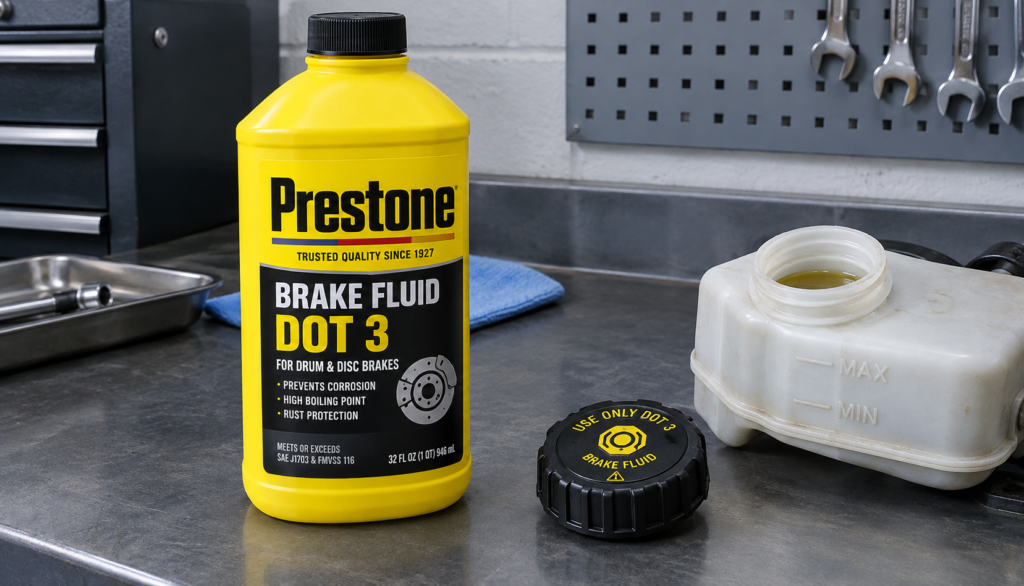
If you’re standing in the auto parts aisle holding a bottle of Prestone DOT 3 brake fluid and wondering whether