
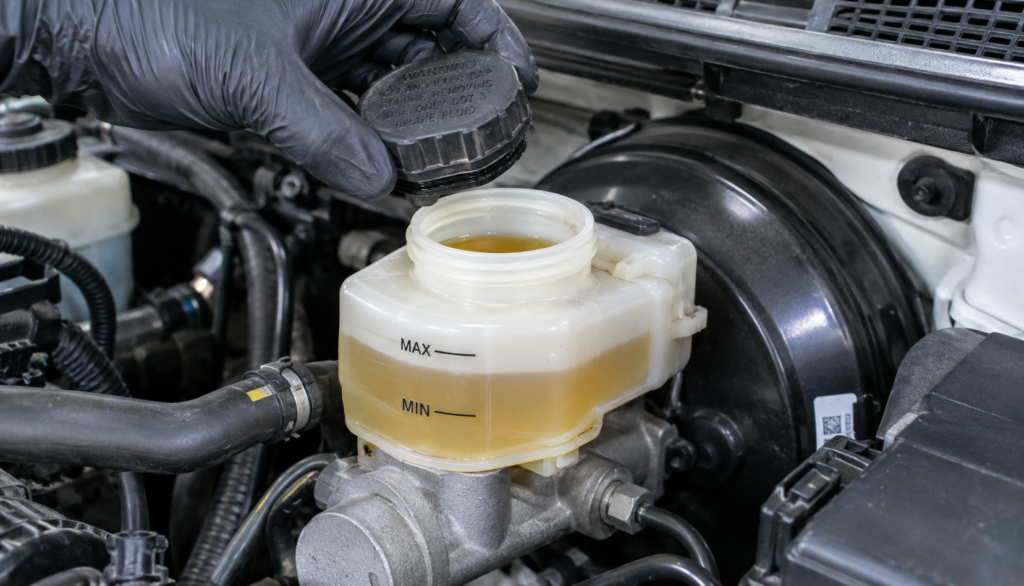
Most drivers never think about brake fluid until something feels wrong with the brake pedal. But brake fluid is one of the few maintenance items that breaks down even if you never drive the car. Understanding how often to change brake fluid — and why the interval matters — can be the difference between brakes that respond instantly and a spongy pedal that catches you off guard.
The short answer: most manufacturers recommend a brake fluid change every two years or every 30,000 miles, whichever comes first. But that number isn’t universal, and the real answer depends on your vehicle, your driving conditions, and the type of brake fluid your car uses.
The General Brake Fluid Change Interval
For the average daily-driven vehicle, a brake fluid flush every two years is the most commonly cited guideline across manufacturers. Some brands stretch that to three years, while performance vehicles or trucks used for towing may call for more frequent service. If you’re wondering how often brake fluid needs to be changed on your specific car, the fastest way to get a real answer is your owner’s manual — manufacturer recommendations vary enough that a blanket rule can miss your vehicle’s actual needs.
| Vehicle Type | Typical Brake Fluid Change Interval |
|---|---|
| Standard passenger car | Every 2 years or 30,000 miles |
| Truck or SUV (regular towing) | Every 1–2 years |
| Performance vehicle | Every 1–2 years, sometimes annually |
| New vehicle (first service) | Often 2–3 years from purchase |
These numbers are starting points, not hard rules. Two vehicles built the same year can need a brake fluid flush at very different times depending on climate, mileage, and how the car is driven.
Why Brake Fluid Needs to Be Changed at All
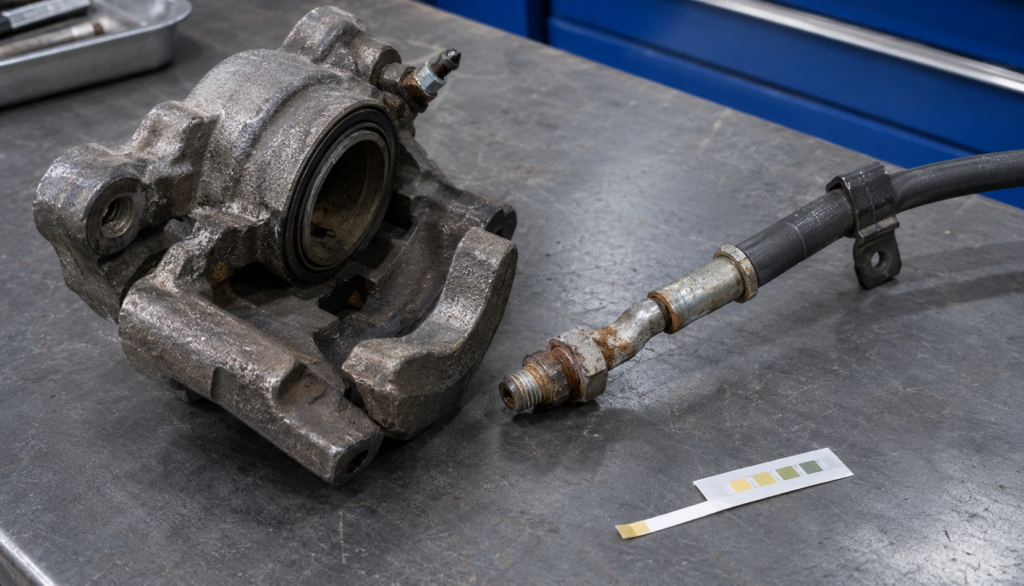
Unlike engine oil, brake fluid doesn’t wear out from friction or heat cycling in the same way. Instead, most brake fluid types are hygroscopic, meaning they absorb moisture from the air over time — even inside a sealed hydraulic system. That moisture works its way in through microscopic seams in hoses, seals, and the brake fluid reservoir cap.
As water content builds up, two things happen. First, the fluid’s boiling point drops, since water boils at a much lower temperature than brake fluid is designed to withstand. Second, moisture creates the conditions for corrosion inside brake lines, the master cylinder, and brake calipers. Neither problem announces itself right away, which is exactly why brake fluid maintenance runs on a schedule rather than waiting for a visible symptom.
DOT 3 vs. DOT 4: Does Brake Fluid Type Affect the Interval?
Yes, to a degree. DOT 3 and DOT 4 are the two most common brake fluid types in passenger vehicles, and both are glycol-based, meaning both absorb moisture. DOT 4 has a higher boiling point and slightly better resistance to moisture-related boiling point drop, but it still absorbs water over time and still needs replacement on a schedule — it isn’t a “change it less often” fluid, just a fluid with more thermal headroom in demanding conditions.
Always use the brake fluid type specified in your owner’s manual. Mixing fluid types, or topping off with the wrong one, can affect performance and, in some cases, damage seals in the hydraulic system.
Signs Your Brake Fluid Change Is Overdue
While brake fluid replacement is meant to happen on a schedule rather than in reaction to a problem, there are a few signals worth knowing. A spongy or softer-than-normal brake pedal can point to moisture or air in the brake lines. Fluid that looks dark or cloudy in the reservoir, rather than clear to light amber, has usually absorbed enough contamination to warrant a flush. Reduced brake performance or a longer stopping distance can also be tied to degraded fluid, particularly after hard braking on a long descent, since a lower boiling point makes brake fade more likely under heat.
These are indicators, not a full diagnostic list — for a deeper breakdown of warning signs, see our guide on the symptoms of bad brake fluid. This article focuses specifically on the timing question: how often to replace it, not how to tell it’s already failing.
What Driving Conditions Shorten the Interval
Certain driving patterns pull moisture into the brake system faster or put more heat stress on brake fluid, which shortens how often it should be changed:
- Frequent towing or hauling heavy loads, which increases brake heat and stress on the hydraulic system
- Regular mountain or steep-grade driving, where sustained braking raises fluid temperature
- Humid or coastal climates, where more ambient moisture accelerates water absorption
- Short trips with frequent stop-and-go traffic, which keeps brakes engaged often without giving the system time to fully cool
- High-mileage vehicles with older seals, which may let in moisture faster than a newer hydraulic system
If more than one of these applies to your driving, it’s reasonable to have your brake fluid tested annually rather than waiting the full two years.
How a Mechanic Checks Brake Fluid Condition
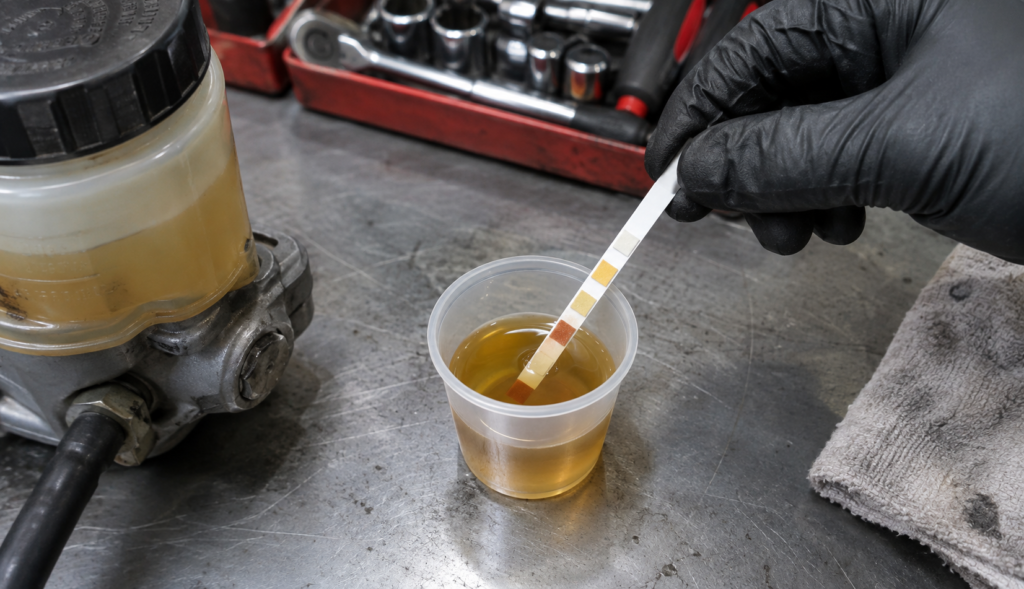
You don’t have to guess when brake fluid needs changing. Most shops use a brake fluid test strip that measures moisture/copper content directly, giving a more accurate answer than fluid color alone. A certified technician can run this test in a few minutes during a routine inspection, and many shops will do it for free as part of a general vehicle checkup.
If you want to check fluid condition yourself between visits, a quick visual inspection of the reservoir is a reasonable starting point — but a test strip or professional check is the only way to know moisture content with any real accuracy, since color can look fine even when water content is climbing.
What the Warning Light Doesn’t Tell You
Most cars don’t have a dedicated “change your brake fluid” warning light. If your brake warning light or ABS light comes on, it’s more likely flagging low fluid level, a sensor issue, or an ABS system fault — not fluid age. This catches a lot of drivers off guard: they assume no warning light means the brake fluid is fine, when in reality, degraded brake fluid can build up moisture and lose boiling point for two full years without ever triggering a light.
The quick DIY test most people rely on — glancing at fluid color in the reservoir — is also misleading on its own. Brake fluid can pick up moisture and lose its boiling point well before it visibly darkens, especially with DOT 4 fluid, which resists visible degradation slightly longer than DOT 3 even as water content climbs. A cheap fix (topping off fluid that looks fine) can mask a bigger issue (fluid that’s due for a full flush based on time or mileage, not appearance). If your car is due by mileage or time, don’t let clear-looking fluid talk you out of the service — appearance and actual condition aren’t always the same thing.
Cost Context: What to Expect at Change Time
A full brake fluid flush is a relatively affordable line item compared to most other brake system maintenance, since it doesn’t involve replacing parts like calipers or rotors — just removing old fluid and refilling with new fluid to manufacturer specification. Exact pricing varies by shop, region, and vehicle. For a full cost breakdown, see our dedicated guide on brake fluid change cost — this article stays focused on timing and intervals rather than pricing.
Building Brake Fluid Checks Into Your Maintenance Schedule
The easiest way to stay on top of brake fluid replacement is to fold it into your existing vehicle maintenance checklist rather than tracking it separately. A few practical habits:
- Check your owner’s manual for the manufacturer-specified interval and write it into your maintenance calendar
- Ask for a brake fluid test strip check at every oil change or annual inspection, even if a full flush isn’t due yet
- Watch for any change in brake pedal feel, especially sponginess, as an early signal worth checking sooner than scheduled
- If you tow, drive in mountains, or live in a humid climate, default to the shorter end of the recommended interval
Treating brake fluid like a scheduled service — rather than something to address only when a problem shows up — keeps the entire hydraulic system, from the master cylinder to the calipers, working the way it’s designed to.
Frequently Asked Questions
Q. How often should you change brake fluid?
A. Most manufacturers recommend changing brake fluid every two years or 30,000 miles, whichever comes first, though your owner’s manual is the most accurate source for your specific vehicle.
Q. What happens if you never change your brake fluid?
A. Over time, moisture builds up in the fluid, lowering its boiling point and increasing the risk of corrosion in brake lines and components, which can eventually affect brake pedal feel and stopping performance.
Q. Does brake fluid go bad even if the car isn’t driven much?
A. Yes. Brake fluid absorbs moisture from the air over time regardless of mileage, so a low-mileage vehicle can still need a fluid change based on age rather than distance driven.
Q. Can you tell brake fluid needs changing just by looking at it?
A. Not reliably. Fluid can look clear while already carrying enough moisture to lower its boiling point, which is why a brake fluid test strip is more accurate than a visual check alone.
Q. Is DOT 4 brake fluid change interval longer than DOT 3?
A. Not significantly. DOT 4 has a higher boiling point and slightly better moisture resistance, but it still absorbs water over time and should be changed on the same general schedule as DOT 3.