
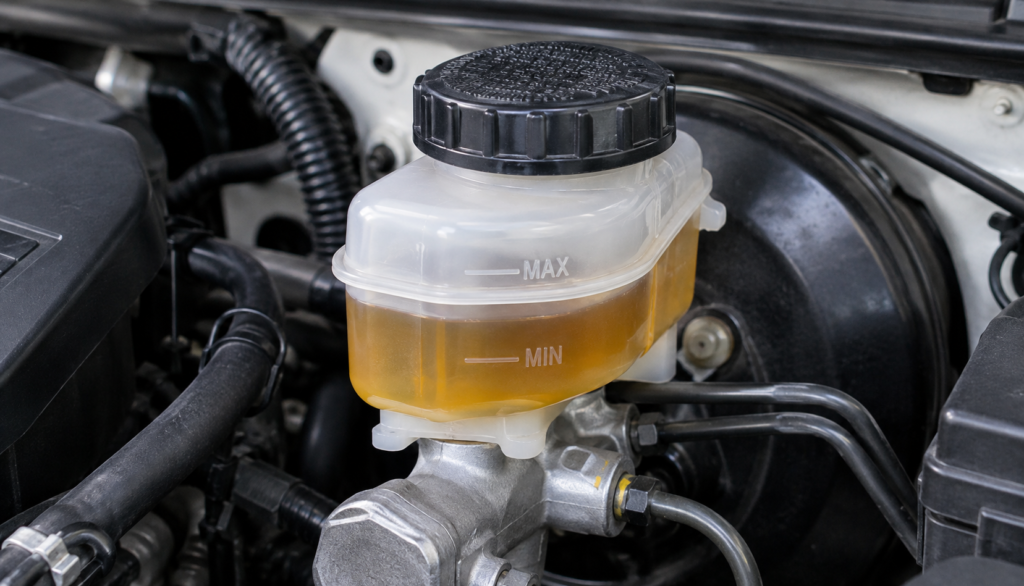
If you’ve popped the hood and peeked into the brake fluid reservoir, you’ve probably wondered whether what you’re looking at is normal. Brake fluid color is one of the simplest ways to check the health of your braking system without any tools — but only if you know what you’re looking at. Fresh brake fluid and old brake fluid don’t look the same, and knowing the difference can tell you a lot about when it’s time for a brake fluid change.
Here’s a full breakdown of what color brake fluid should be, what different colors mean, and when a color change is telling you something worth paying attention to.
What Color Is New Brake Fluid?
New brake fluid is clear to pale straw-yellow, similar to the color of light cooking oil or fresh apple juice. Depending on the type of brake fluid your vehicle uses, that starting shade can vary slightly:
- DOT 3 and DOT 4 (the most common types) start out nearly clear with a faint yellow tint.
- DOT 5.1 looks similar to DOT 3/4 — clear to light yellow.
- DOT 5 (silicone-based, less common) is usually purple, so it stands apart visually from glycol-based fluids.
If you check your brake fluid reservoir shortly after a flush or top-off, this pale, almost-clear color is what you should see. It’s the baseline everything else gets compared to.
Why Does Brake Fluid Change Color Over Time?
Brake fluid doesn’t stay clear forever, and that’s expected. Most brake fluid is glycol-based, which means it’s hygroscopic — it naturally absorbs moisture from the air over time, even in a sealed system. As it absorbs water and picks up trace amounts of metal particles from brake lines, calipers, and the master cylinder, it gradually darkens.
This darkening happens gradually, not overnight, so a small color shift after a year of driving is completely normal. The color change becomes something to act on when it moves further along the color chart below or when it’s paired with other symptoms like a spongy brake pedal.
Brake Fluid Color Chart: What Each Shade Means
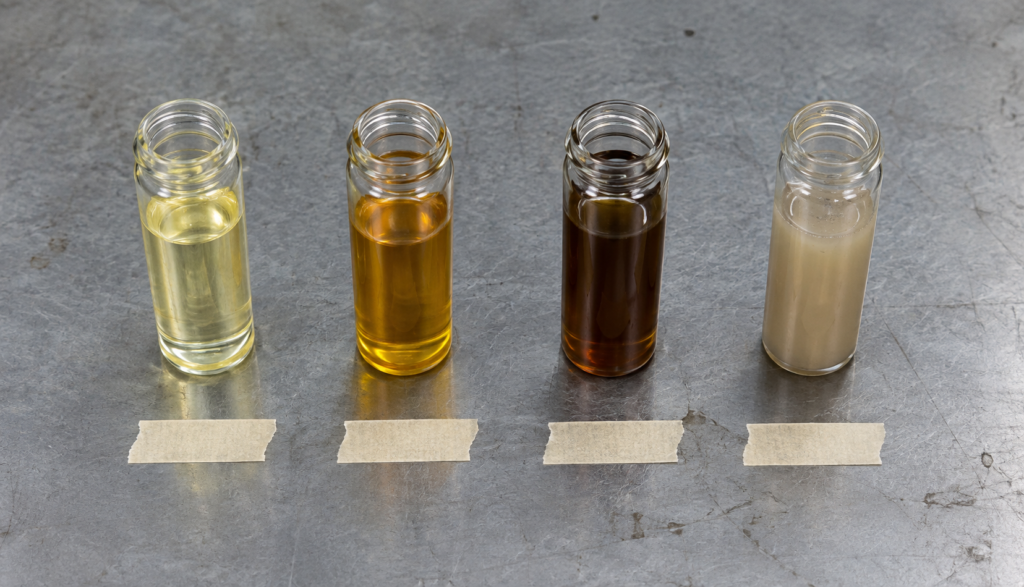
| Color | Condition | What It Means |
|---|---|---|
| Clear to light yellow | New/fresh | Healthy fluid, no action needed |
| Amber or honey | Slightly aged | Normal aging, keep monitoring at next service |
| Brown | Aged/contaminated | Moisture and debris buildup — flush recommended |
| Dark brown to black | Heavily degraded | Significant contamination — flush needed soon |
| Milky or cloudy | Water contamination | Water has entered the system — inspect and flush promptly |
This chart is a general guide rather than an exact science — lighting inside a reservoir can make fluid look darker or lighter than it really is. If you’re ever unsure, a mechanic can check the fluid under proper lighting or test it with fluid test strips in a couple of minutes.
Does Brake Fluid Color Actually Matter?
Yes, but color is a symptom, not the root problem. What actually matters is what’s causing the color change: moisture content and contamination. Water in brake fluid lowers its boiling point, which can lead to a spongy or less responsive brake pedal — especially under hard braking when heat builds up in the system. Contamination from corroded brake lines or a worn master cylinder can also introduce rust particles, which show up as a darker, sometimes gritty-looking fluid.
So while color alone isn’t a diagnosis, dark or cloudy brake fluid is a reliable early warning sign that’s worth following up on — before it turns into a bigger repair.
What the Warning Light Doesn’t Tell You
Most cars don’t have a dashboard light dedicated to “check your brake fluid color.” The brake warning light typically only triggers for low fluid level or worn brake pads, not fluid quality. That means brake fluid can quietly degrade for years without ever tripping a warning on your dashboard — the only way to catch it early is a visual check of the reservoir or a fluid test during routine maintenance.
This is also where people get the diagnosis wrong. A spongy brake pedal doesn’t automatically mean your brake fluid is bad — it can just as easily be air in the brake lines, a failing master cylinder, or worn brake pads. Dark fluid supports the moisture-contamination theory, but it shouldn’t be treated as the only possible cause. If the pedal feel is off and the fluid also looks dark or milky, that combination is a stronger case for a flush. If the pedal feels normal and the fluid is just slightly amber, you likely have time before it needs attention.
It’s also worth knowing that fluid color can look worse than it is depending on the reservoir’s plastic and lighting — some translucent reservoirs discolor over time and make the fluid inside look darker than it actually is. When in doubt, a technician checking fluid straight from the line (not through the reservoir window) gives a more accurate read.
How to Check Your Brake Fluid Color Yourself
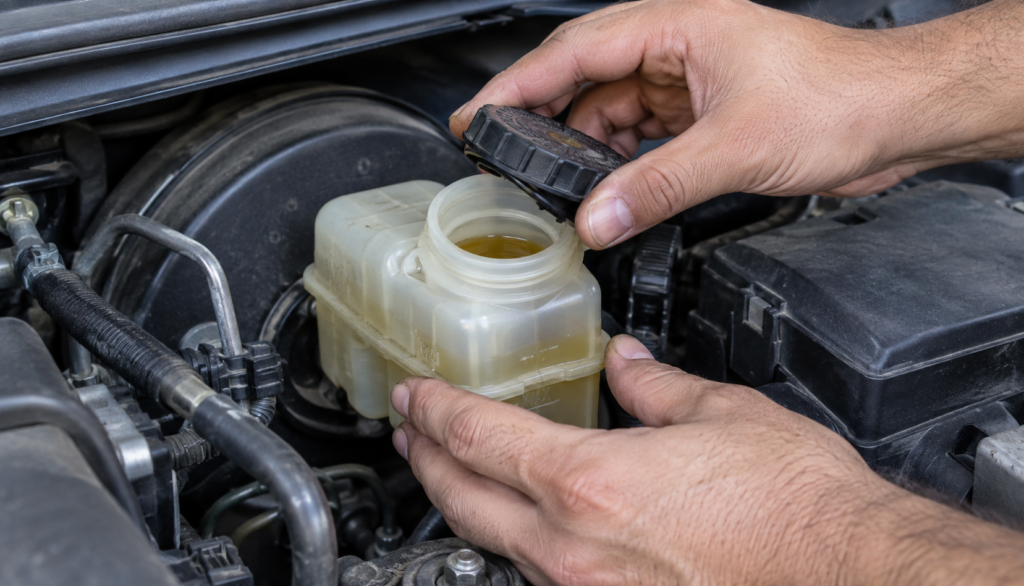
Checking brake fluid color is quick and doesn’t require removing anything on most vehicles:
- Park on level ground and let the engine cool.
- Locate the brake fluid reservoir, usually near the back of the engine bay on the driver’s side, mounted on top of the master cylinder.
- Most reservoirs are translucent, so you can see the fluid level and color without opening the cap.
- Compare what you see to the color chart above — clear to light amber is normal, brown to black or cloudy means it’s time for a closer look.
- Avoid opening the reservoir cap unnecessarily, since this exposes the fluid to moisture and dust.
If your reservoir isn’t translucent or you can’t get a clear view, a mechanic can check it in seconds during any routine service.
DOT 3, DOT 4, and DOT 5: Does Fluid Type Change the Color?
Fluid type affects the starting color slightly, but the aging pattern is similar across DOT 3, DOT 4, and DOT 5.1, since all three are glycol-based and absorb moisture the same way. DOT 5 silicone fluid is the outlier — it starts purple and doesn’t absorb water the way glycol-based fluids do, so it ages differently and is far less common in daily-driven vehicles.
One important rule regardless of type: never mix silicone-based DOT 5 with glycol-based DOT 3, 4, or 5.1. They aren’t compatible, and mixing them can damage seals and compromise braking performance. If you’re not sure which type your vehicle uses, check your owner’s manual or the reservoir cap, which usually lists the correct type.
When Should You Get Brake Fluid Checked or Changed?
Most manufacturers recommend a brake fluid flush every 2 to 3 years, regardless of color, since moisture absorption happens even without visible discoloration. That said, color can move up that timeline. Get it checked sooner if you notice:
- Fluid that looks brown, black, or cloudy
- A spongy or soft brake pedal
- Longer stopping distances than usual
- A burning smell after repeated hard braking
- The brake warning light paired with a low fluid level
A brake fluid flush is a relatively inexpensive, routine service — it’s far cheaper than the repairs that can result from ignoring contaminated fluid over the long term, like corroded brake lines or a damaged master cylinder.
Frequently Asked Questions
Q: What color should healthy brake fluid be?
A: Healthy brake fluid is clear to light amber or honey-colored. Anything darker than that, or cloudy/milky in appearance, suggests it’s time for an inspection.
Q: Is dark brown brake fluid dangerous?
A: Dark brown brake fluid isn’t immediately dangerous, but it usually means significant moisture and contamination have built up, which can affect braking performance over time. It’s a strong sign a flush is due soon.
Q: Can I just top off dark brake fluid instead of flushing it?
A: Topping off only dilutes the old fluid slightly — it doesn’t remove the moisture and contaminants already in the system. A full flush is needed to actually restore fluid quality.
Q: Why is my brake fluid milky or cloudy?
A: Milky or cloudy brake fluid usually means water has gotten into the system, which can happen through a compromised seal or extended moisture exposure. This should be checked and flushed promptly, since water lowers the fluid’s boiling point.
Q: Does brake fluid color affect brake performance directly?
A: Color itself doesn’t affect performance — what matters is the moisture and contamination the color change indicates. Dark or cloudy fluid is a visual cue, not the direct cause of any performance issue.