
Your Honda’s braking system depends entirely on brake fluid to convert the pressure from your foot on the pedal into stopping force at all four wheels. But unlike your engine oil, brake fluid doesn’t just get old — it gradually absorbs moisture from the air, breaks down under heat, and collects metal particles from your brake components. These changes happen silently, until one day you press the pedal and notice something feels wrong.
Most Honda owners follow their maintenance schedule without thinking about brake fluid until a dashboard warning light appears. But by then, your braking performance may already be compromised. Learning to recognize the early warning signs can help you catch a failing brake fluid situation before it becomes a safety problem — and before repair costs climb.
This guide walks you through the most common signs your Honda’s brake fluid needs changing, what each symptom means, and why ignoring them can damage expensive brake components.
Your Brake Pedal Feels Soft or Spongy
A soft or spongy brake pedal is the single most common early warning sign that brake fluid is failing. When you press the pedal, instead of feeling firm resistance, it sinks toward the floor, and you may need to pump it several times to get a solid brake response. This happens for a specific reason.
Brake fluid is incompressible — it’s engineered to transfer force instantly when you press the pedal. But as brake fluid ages and absorbs moisture, it becomes more compressible. Air can also enter the brake lines through worn seals or cracks, and air pockets in the system have the same spongy effect. Every time you press the pedal, that compressible fluid or air absorbs some of the force that should be reaching your brake calipers, and you have to push harder and further to get the same braking power.
In some cases, especially if your Honda has been sitting unused for a week or longer, the first press of the pedal may feel very soft, then firm up after a few pumps. This is often a sign of air in the brake lines, which can develop when moisture causes seal degradation. Either way, this symptom demands attention: a spongy pedal is your braking system telling you it’s not operating at full pressure.
Your Brake Pedal Travels Much Further Than Normal
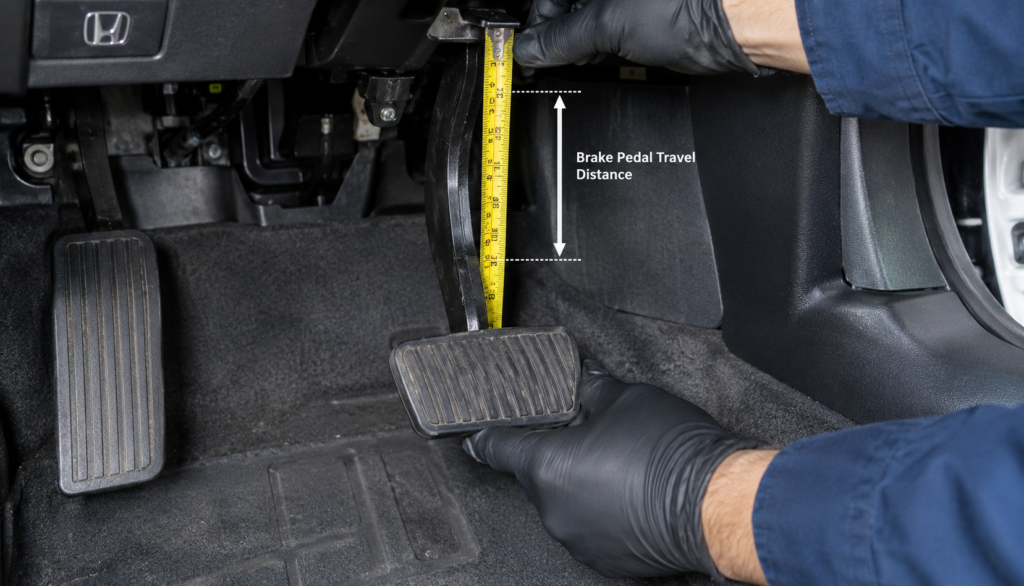
Related to the spongy pedal is a condition where the pedal itself physically travels closer to the floor before your brakes engage. Normally, your Honda’s brake pedal should engage within the first half of its travel range. If you find yourself pushing it 70 or 80 percent of the way down before the brakes respond, brake fluid degradation is a likely culprit.
This extended pedal travel happens for the same reason as the spongy feel: a compromised hydraulic system doesn’t build pressure efficiently. Contaminated or water-logged brake fluid loses its ability to transmit full pressure to the calipers. The same applies if air is trapped in the lines — air compresses, pushing the work further into the stroke before the fluid finally reaches the brake caliper and engages the pads.
Pay special attention if the extended pedal travel is new — if your Honda has always had a firm pedal and suddenly it’s traveling further, don’t assume it’s “just how your car feels now.” This is a diagnostic sign that something in the brake system is degrading, and brake fluid is the first thing to check.
The ABS (Anti-Lock Braking) Light Comes On
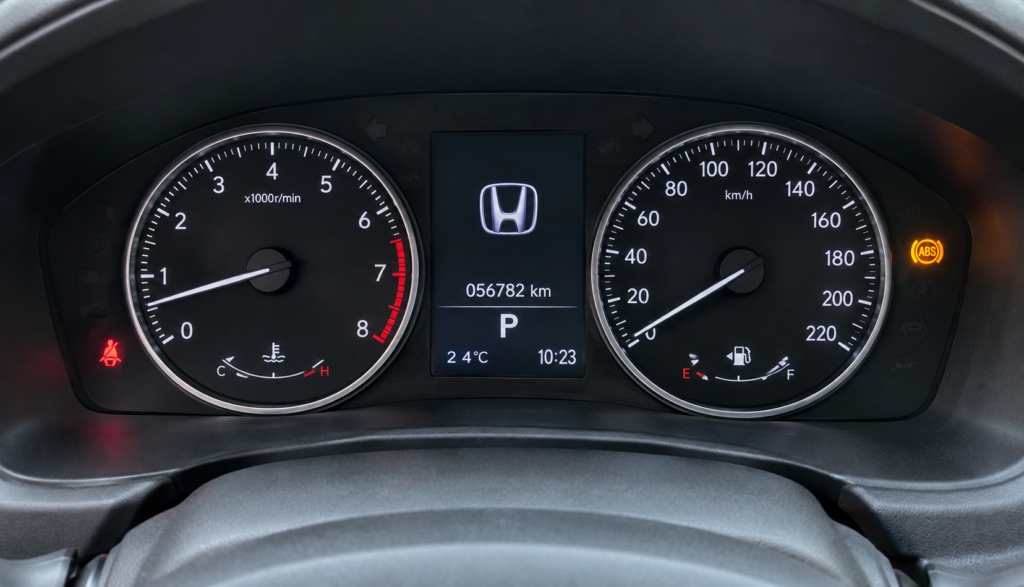
Modern Hondas have an anti-lock braking system that prevents wheel lockup during hard stops. This system is monitored by a dedicated warning light on your dashboard. When that light comes on, one common culprit is low or degraded brake fluid.
The ABS system relies on precise brake fluid pressure to pulse the brakes during an emergency stop. If your brake fluid is contaminated or low, the system detects that it can’t maintain the pressure needed to function correctly, and it triggers the ABS warning light. In some cases, the system will even disable ABS function to prevent unsafe operation.
The ABS light can mean several things — a faulty ABS sensor, a wheel-speed sensor problem, or an internal ABS pump failure — but low or dirty brake fluid is the easiest and cheapest fix. Before you assume you have an expensive ABS module failure, have a mechanic check your brake fluid condition and level. Often, a simple fluid flush will clear the light.
Your Brake Fluid is Dark Brown, Black, or Discolored
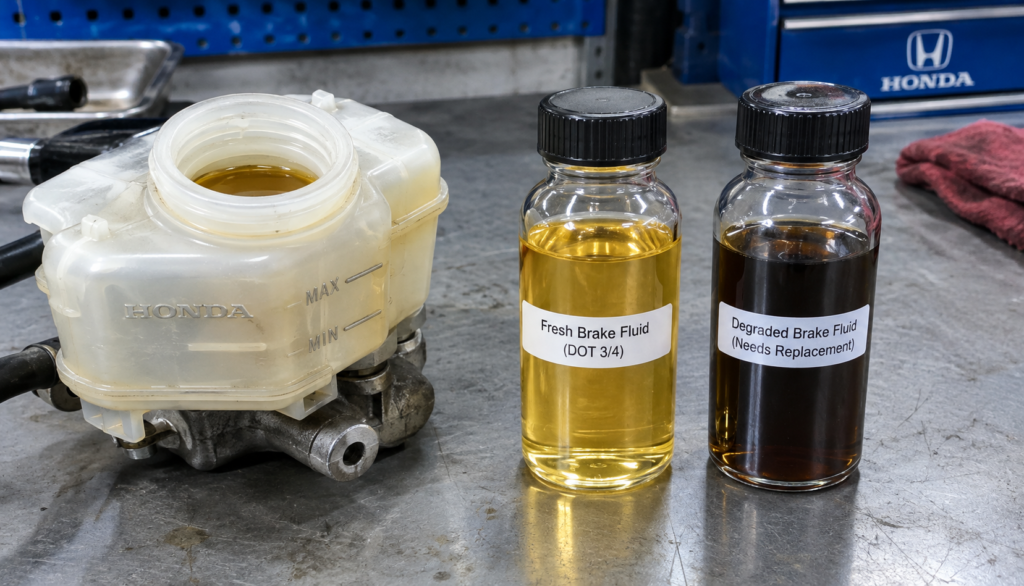
Fresh brake fluid is clear or pale amber. Over time, brake fluid darkens as it accumulates contaminants. These contaminants include metal particles from your brake pads, calipers, and brake lines; rust from corrosion inside the system; and breakdown products from the fluid’s additives.
Dark or black brake fluid is a visual red flag that your brake system has been working hard or has been exposed to moisture and heat for an extended period. The darker the fluid, the more contamination it holds. Black fluid indicates severe degradation and is a sign you should schedule a brake fluid flush immediately.
Checking your brake fluid color is simple: open the hood, locate the brake fluid reservoir (a plastic tank on the driver’s side of the engine bay), and look at the fluid inside. If it’s noticeably darker than pale amber, your brake fluid is degraded and should be replaced. Some Hondas have a window on the side of the reservoir so you can check color without opening the cap.
What the Warning Light Doesn’t Tell You: Moisture vs. Contamination
Here’s where brake fluid maintenance gets deceptive. Many Honda owners assume that as long as the brake fluid looks okay and the pedal feels firm, everything is fine. But the most dangerous type of brake fluid failure happens invisibly.
Brake fluid absorbs moisture from the air through microscopic permeability in brake hoses and through the reservoir vent. In humid climates like coastal areas or during wet seasons, moisture enters your brake system constantly, even when the car is parked in a garage. Over a year or two, this moisture builds up inside the fluid.
The problem: the fluid may still look relatively clear. You can’t see the water with your eyes. But that moisture reduces the brake fluid’s boiling point, causes corrosion inside your calipers and master cylinder, and weakens the additives that protect your brake components.
This is why Honda and most manufacturers recommend changing brake fluid every 3 years regardless of color or apparent condition. You can’t rely on visual inspection alone. By the time your brake fluid looks black, you’ve already lost years of protective additive function and started accelerating internal corrosion. The damage may already be done to expensive brake components.
You Notice a Burning Smell When Braking
A burning or acrid smell when you apply the brakes is a warning that brake components are overheating. Worn brake pads, a stuck caliper, or excessive brake dust can all cause this. But it can also be a sign that your brake fluid is breaking down under heat.
If brake fluid overheats — usually from prolonged hard braking or mountain driving — it can begin to vaporize, a condition called brake fade. When brake fluid vaporizes, it stops transmitting pressure (remember, liquids can’t be compressed, but gases can), and your brakes lose effectiveness exactly when you need them most. A burning smell combined with a soft pedal or reduced braking power is a serious safety warning.
Additionally, an overheated brake system often indicates that your brake fluid’s boiling point is already compromised. Older or contaminated brake fluid boils at a lower temperature than fresh fluid. If you’re experiencing brake fade on normal driving routes (not just descending mountains), your brake fluid may have degraded to the point where it can’t handle normal thermal stress.
Your Brakes Feel Weak or Take Longer to Stop
Reduced braking power is the end result of brake fluid failure. If your Honda seems to take longer to stop than it used to, or if you have to press harder on the pedal to achieve the same braking force, brake fluid degradation is a strong possibility.
Weak brakes can stem from several sources — worn brake pads, air in the lines, a failing master cylinder, or warped rotors — but degraded brake fluid is one of the most common and easiest to remedy. Contaminated brake fluid has a lower viscosity (it’s thinner), which means it can’t build as much pressure. A simple fluid flush often restores full braking power.
Pay attention to your stopping distance. If you notice that at the same speed, stopping now takes noticeably more distance than it did six months ago, and you haven’t replaced your brake pads recently, have your brake fluid inspected. Weak brakes are a safety issue that needs immediate diagnosis.
You See Fluid Leaking Near the Wheels or Under the Car
Brake fluid leaks are a sign that seals inside your brake system are failing. Contaminated or old brake fluid accelerates seal deterioration because water and corrosion break down the rubber compounds in seal gaskets. You might notice a small puddle under the car, or see fluid seeping around a wheel if a caliper seal is compromised.
Any brake fluid leak is a serious problem because it reduces the total amount of fluid available to build pressure in the brake lines. Even a slow leak can progressively reduce your braking power and increase pedal travel. Additionally, brake fluid is corrosive to paint and rubber, so prolonged leaking can damage surrounding components.
Brake fluid leaks typically mean one of three things: a caliper seal is failing, a brake hose has cracked, or the master cylinder is leaking internally. All three require professional repair. But the root cause is often contaminated brake fluid that degraded the seals. Replacing the fluid alone won’t fix the leak, but replacing degraded seals and flushing with fresh fluid prevents the new seals from failing in the same way.
Brake Fluid Maintenance and How Often to Change It
Honda recommends changing brake fluid every 3 years, regardless of mileage. This interval exists because brake fluid degrades over time from moisture absorption and thermal exposure, not primarily from use. A Honda that sits in a garage and accumulates moisture is just as due for a brake fluid change as one that gets driven 20,000 miles per year.
Some Hondas, particularly newer hybrids like the Accord Hybrid and Clarity, have scheduled brake fluid changes built into the maintenance reminder system. If your Honda shows an MM 0-1-7 or similar code on your dashboard, it’s signaling that a brake fluid change is due. Ignoring this reminder can void your warranty and allows brake system corrosion to progress unchecked.
The cost of a brake fluid flush at a Honda dealership typically ranges from $80 to $200 for labor, plus $20–$40 for the fluid itself. Independent shops may charge less. While this may seem like an expensive maintenance item for something that looks like it’s working fine, it’s significantly cheaper than repairing a corroded master cylinder, calipers, or brake lines — repairs that can easily cost $500 to $1,500 per component.
FAQ: Common Questions About Honda Brake Fluid
Q: Can I check my Honda’s brake fluid myself?
A: Yes. Open your hood and locate the brake fluid reservoir on the driver’s side of the engine bay (a translucent plastic tank). Look at the fluid level and color through the side window or by carefully opening the cap. Fluid should be between the MIN and MAX marks and clear or light amber in color. If it’s low or dark, schedule a service appointment.
Q: Is a soft brake pedal always a sign of brake fluid problems?
A: No, but it’s the most common sign. A soft pedal can also indicate air in the brake lines, a failing master cylinder, or a leak in the system. However, brake fluid degradation is worth checking first because it’s the easiest and cheapest to fix.
Q: My Honda’s ABS light is on. Does that definitely mean I need a brake fluid flush?
A: Not always. The ABS light can indicate a faulty ABS sensor, wheel-speed sensor problem, or ABS module failure. But low or dirty brake fluid is a common culprit and the first thing a mechanic should check. Have the brake fluid inspected before authorizing expensive ABS repairs.
Q: Should I change brake fluid on my own?
A: Brake fluid changes require bleeding the brake lines to remove air, which is difficult without specialized equipment. Brake fluid is also corrosive to paint and skin, and using the wrong fluid type can damage your brake system. It’s worth paying a professional to do this job correctly.
Q: Can I use DOT 3 brake fluid instead of the DOT 4 my Honda calls for?
A: No. Always use the exact fluid specification your Honda’s owner’s manual specifies. DOT 4 has a higher boiling point and better moisture resistance than DOT 3. Using the wrong type can reduce braking performance and accelerate system degradation. Check your manual or ask your mechanic what type your specific Honda requires.