
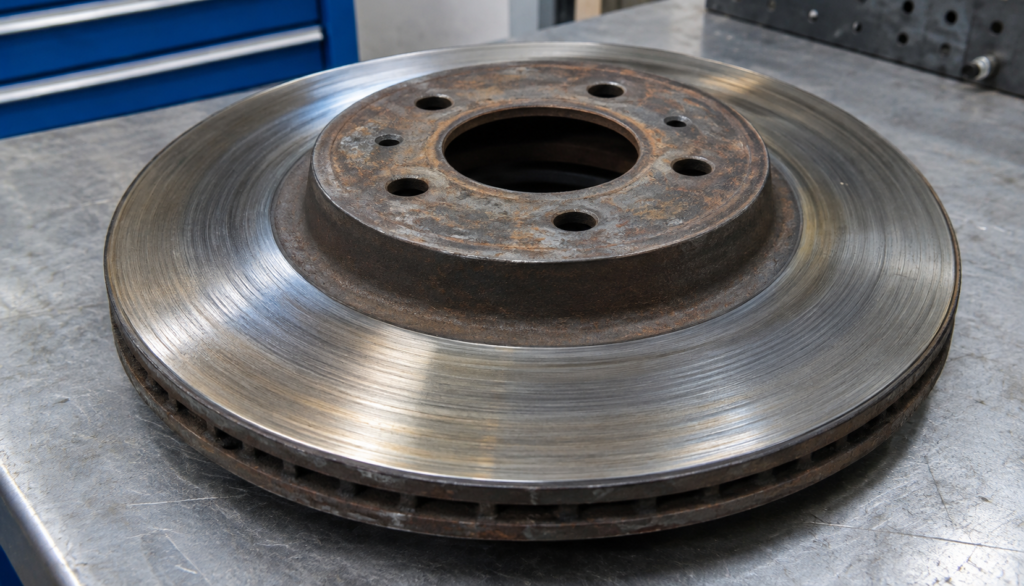
If your steering wheel shakes or your brake pedal pulses every time you slow down, warped brake rotors are one of the most common culprits. This isn’t a subtle problem — once rotors are warped enough to feel, it usually gets worse, not better, until it’s addressed. Here’s how to recognize the symptoms, understand what’s causing them, and know what fix actually applies to your situation.
What Does It Feel Like When Rotors Are Warped?
Warped rotor symptoms show up specifically when you’re braking — not while cruising, not while accelerating. The most reliable signs are:
- Steering wheel shake when braking — a rhythmic wobble that gets stronger the harder you brake, especially noticeable at highway speeds.
- Brake pedal pulsation — you can feel the pedal pulse or push back against your foot rather than staying firm.
- Vibration when braking that travels through the whole car, not just the wheel.
- In more advanced cases, a faint grinding or scraping sound layered on top of the vibration.
If you’re only hearing noise with no pulsation or shake, that’s more likely a pad or bearing noise issue than warped rotors — see the difference explained further down.
Warped Rotors vs. Other Brake Problems: How to Tell the Difference
A lot of brake symptoms get lumped together, but warped rotors have a distinct signature. Here’s a quick comparison:
| Symptom | Likely Cause |
|---|---|
| Pulsation only when braking, smooth otherwise | Warped rotors / rotor thickness variation |
| Constant grinding, present even without braking | Worn-out pads or bearing noise (not rotor warping) |
| Squeal only on light braking | Brake pad wear indicators, unrelated to warping |
| Pull to one side when braking | Uneven pad wear or caliper sticking, not necessarily warping |
The pulsation-only-while-braking pattern is the single clearest indicator of warped rotors specifically, versus other brake issues that can feel similar at first.
What Causes Rotors to Warp
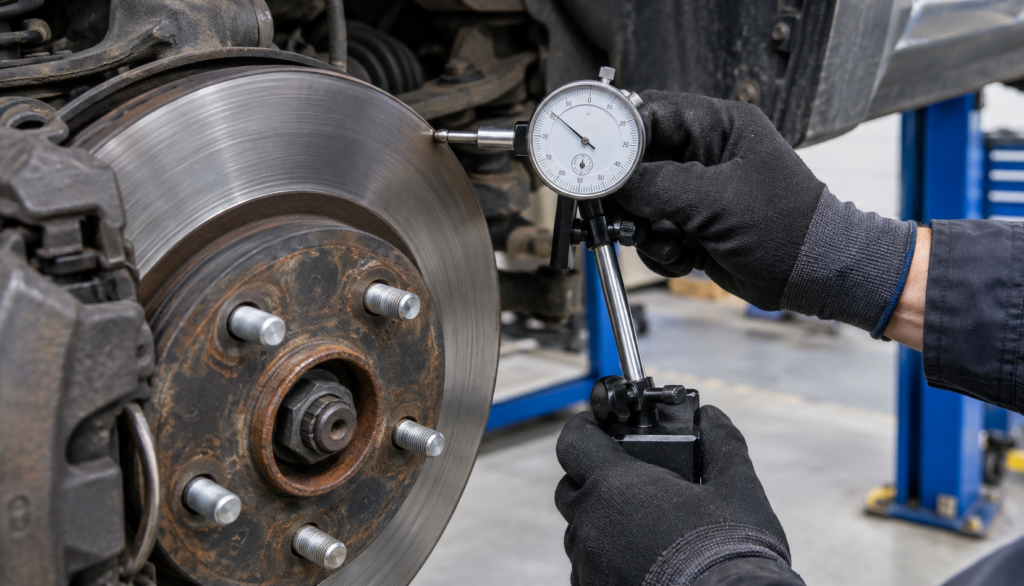
“Warped” is actually a bit of a misnomer — most modern rotors don’t bend out of shape from heat the way people assume. What actually happens is rotor thickness variation: uneven material deposits or uneven wear across the rotor’s surface, which creates the same pulsating sensation as a physically bent rotor. Common causes include:
- Overheated brakes from aggressive braking, riding the brakes on long descents, or towing.
- Uneven cooling — for example, hitting a puddle or driving through cold water right after hard braking, which can shock a hot rotor unevenly.
- Stuck or dragging calipers that keep constant, uneven pressure on one part of the rotor.
- Leaving the parking brake engaged while driving, which creates concentrated heat and wear.
- Incorrect lug nut torque or uneven torque pattern, which can cause the rotor to seat unevenly against the hub.
- Normal aging — rotors don’t last forever, and thickness variation naturally increases as they near the end of their service life.
Is It Safe to Drive on Warped Rotors?
In the short term, warped rotors don’t eliminate your ability to stop — you’ll still have braking power. But they reduce braking consistency and predictability, and the problem virtually always worsens with continued driving. If you’re only feeling mild pulsation at highway speeds, it’s not an immediate emergency, but it should be addressed soon. If pulsation is severe, paired with noise, or you notice longer stopping distances, treat it as a near-term priority rather than something to put off.
Can You Drive on Warped Rotors Temporarily?
Yes, for a short period, most people do keep driving on mildly warped rotors while they schedule a repair. That said, continuing to drive aggressively or tow while rotors are already warped accelerates wear on pads, calipers, and the rotors themselves. If you notice the pulsation getting worse week over week, that’s a sign to move up your repair timeline rather than wait.
What the Warning Light Doesn’t Tell You
Warped rotors almost never trigger a dashboard warning light on their own — there’s no dedicated “rotor” sensor in most vehicles. What can happen is that severe rotor issues eventually trigger an ABS warning light, because the ABS system detects irregular wheel-speed sensor patterns caused by pulsation during braking. If your ABS light comes on along with pulsation, don’t assume the rotor is the only issue — have the ABS system diagnosed alongside the rotor inspection, since a sensor fault can look similar but requires different repairs.
The other thing people miss: pulsation can sometimes mimic a wheel bearing problem or a tire out-of-round condition, especially if it’s mild. If a mechanic resurfaces or replaces the rotors and the vibration persists, it’s worth ruling out bearing wear or tire balance before assuming the rotor work didn’t take.
Resurface or Replace? What Actually Fixes Warped Rotors
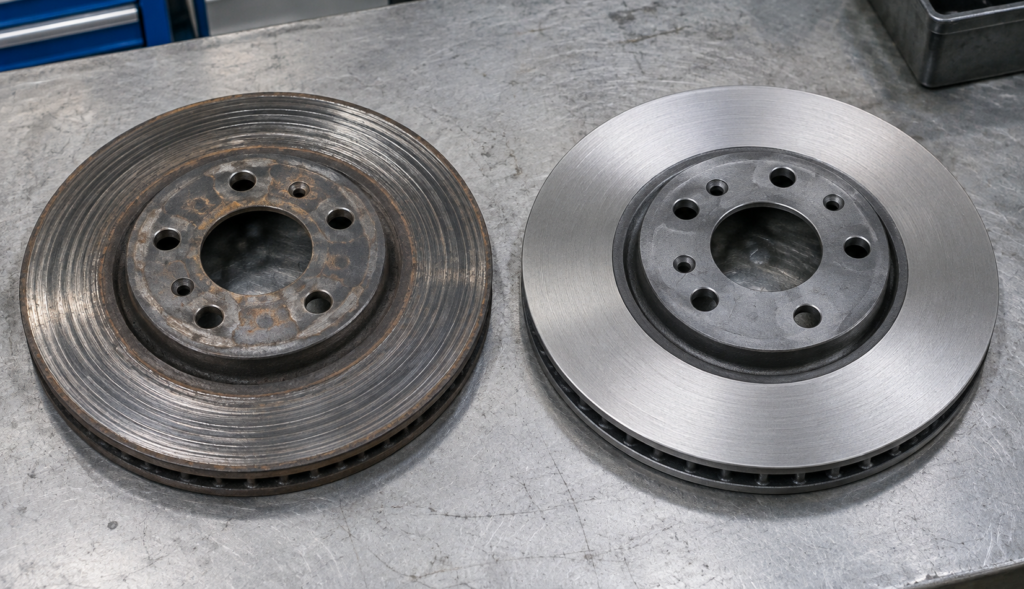
Whether a warped rotor can be resurfaced (machined flat again) or needs full replacement depends on how much material is left:
- Resurfacing is possible if the rotor is still above its minimum thickness spec after material is removed. This is generally the cheaper option.
- Replacement is necessary if resurfacing would take the rotor below minimum thickness, or if the rotor already shows deep grooves, scoring, or cracking.
A shop will measure rotor thickness and runout to determine which applies to your car — this isn’t something to guess at without a measurement. For step-by-step guidance on doing this yourself, see our guide on how to replace brake rotors. For expected pricing, see our brake rotor replacement cost breakdown.
How to Prevent Rotors From Warping Again
- Avoid riding the brakes on long downhill stretches — use lower gears to control speed instead.
- Have caliper function checked whenever you replace pads, since a dragging caliper is a common repeat cause.
- Make sure lug nuts are torqued to spec, in the correct pattern, after any wheel service.
- Avoid dousing hot rotors with cold water after hard braking or track use.
- Replace pads and rotors in pairs when wear is significant, rather than mixing old and new components.
When to See a Mechanic
Get it inspected soon if you notice any of the following:
- Pulsation that’s gotten noticeably worse over the past few weeks
- Pulsation combined with a grinding or metallic noise
- An ABS warning light appearing alongside the vibration
- Longer stopping distances than usual
A quick rotor thickness and runout measurement will tell you definitively whether you’re looking at a resurfacing job or a full rotor replacement — there’s no reliable way to know for certain just by feel.
FAQ
Q. How do I know if my rotors are warped?
A. The clearest sign is pulsation or vibration that happens specifically when braking — in the steering wheel, the brake pedal, or both — and disappears when you’re not braking.
Q. Can warped rotors cause the ABS light to come on?
A. Yes, in more severe cases. Irregular braking patterns from a warped rotor can trigger the ABS system’s wheel-speed sensors, turning on the ABS warning light. It should still be diagnosed rather than assumed.
Q. Is it safe to keep driving with warped rotors?
A. For mild pulsation, yes in the short term, but the problem typically worsens over time and should be addressed soon rather than ignored indefinitely.
Q. Can warped rotors be fixed without replacing them?
A. Sometimes — if there’s enough material left above the minimum thickness spec, a shop can resurface (machine) the rotor instead of replacing it.
Q. What causes brake rotors to warp in the first place?
A. The most common causes are overheating from aggressive or prolonged braking, dragging calipers, uneven cooling, and normal wear as rotors age.