
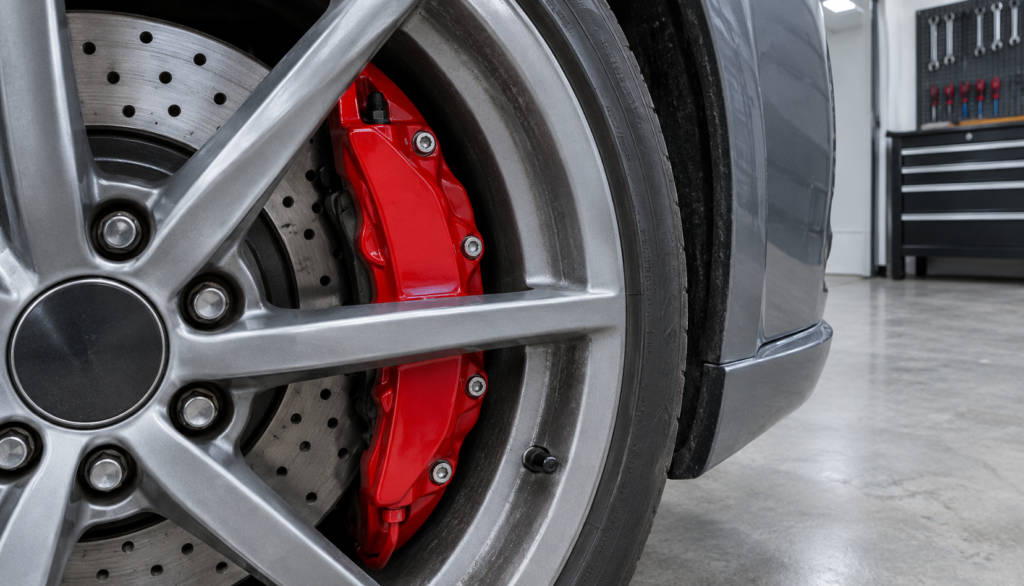
Brake caliper covers are shells that clamp or bolt over your stock calipers so they look like the big, painted calipers you see on performance cars. They are cheap, they take an afternoon to fit, and they change the look of your wheels more than almost any other cosmetic upgrade. They are also one of the most misunderstood aftermarket parts, because a brake caliper is a safety component and a cover is not. Before you buy a set of four, you should know how they fit, what they are made of, how they handle heat, and what they can hide from you.
This guide covers the product side of the question: what a caliper cover kit actually is, whether it affects braking, which materials hold up, how to check fitment, what it costs, and when a cover is the wrong choice.
What Are Brake Caliper Covers?
A caliper cover is a thin shell, usually shaped like a Brembo-style or generic big-brake caliper, that sits on the outside face of your existing brake caliper. It does not replace the caliper, it does not touch the brake rotor, and it does nothing to clamp the brake pads. Its only job is cosmetic: to make a small, dull, or rusty caliper look larger and cleaner through the wheel spokes.
Most caliper cover kit listings sell a set of four, with two covers for the front and two for the rear, though some brands sell front and rear pairs separately. Covers are made for disc brakes only. If your car has drum brakes at the back, the rear covers have nothing to attach to, so you would only fit the front pair.
These are aftermarket parts, not OEM equipment. Your car’s manufacturer does not test or approve them, which matters for how you think about warranty coverage later in this article.
Do Brake Caliper Covers Affect Braking Performance?
Do brake caliper covers affect braking performance? A correctly fitted cover should not change how your car stops, because the hydraulic parts that do the work, including the caliper piston, the brake pads, and the brake fluid circuit, are all untouched. The cover simply rides along on the outside of the caliper.
The word that matters there is “correctly.” A cover that is loose, bent, or too large can contact the wheel, the rotor, or a caliper bolt, and any of those can create problems you will notice quickly: scraping, vibration, or a rattling sound that follows wheel speed. If you hear a new noise after fitting covers, take them off before you assume something else is wrong.
The other question people ask is about heat. Do brake calipers get hot? Yes, very. Hard braking can push caliper and rotor temperatures well past what you could touch, and brake fade becomes a risk when the system cannot shed that heat. Can caliper covers cause overheating? On a normal street car driven normally, a well-made cover leaves enough gap for air to move, and most owners never see a difference. If you tow, drive in mountains, or track the car, a cover that traps heat around the brake caliper is a bad idea, and brake caliper cooling should take priority over looks.
Materials: Aluminum, Steel, and ABS Plastic
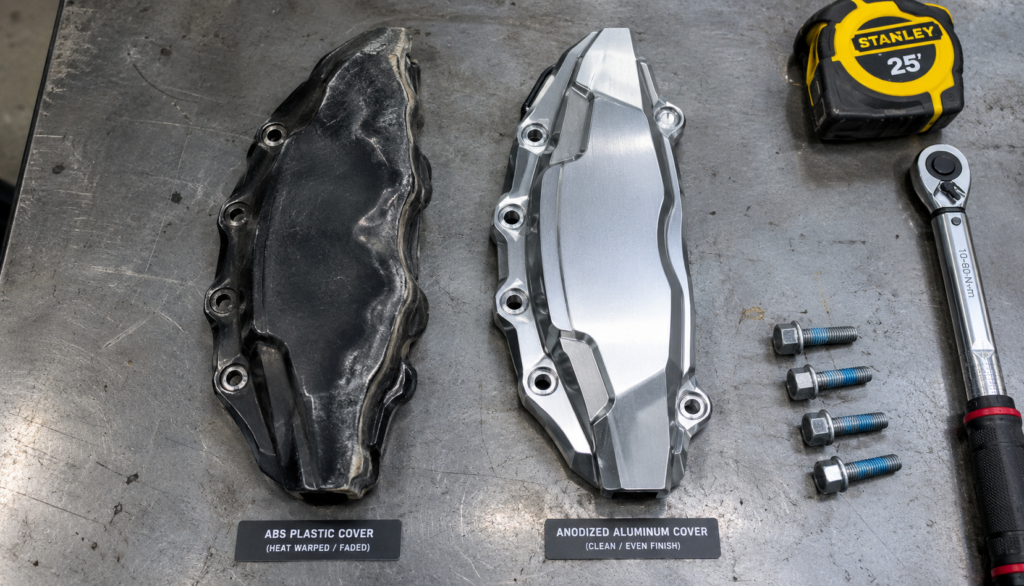
The material decides how long a cover lasts and how it behaves around heat. Here is how the common options compare.
| Material | Heat Handling | Durability | Typical Concern |
|---|---|---|---|
| ABS plastic | Lowest. Can warp under repeated hard braking. | Fades or cracks over a few seasons. | Warping and color fade near hot rotors |
| Aluminum | Good. Handles high temperature better than plastic. | Long lasting if anodized or coated. | Bare metal can show corrosion in salty climates |
| Steel | Very good, but heavy. | Strong, but rusts if the coating chips. | Extra weight and surface rust |
For most street cars, aluminum is the safest middle ground. It is heat resistant, light, and holds a finish well. ABS plastic is the cheapest and the most common in the lowest priced covers, and it is the material most likely to give trouble if you drive hard. Steel is rare in this category and mostly shows up in heavier universal fit kits.
Finish matters too. Red is the classic choice because it mimics factory performance calipers, while gloss black suits cars with dark wheels. Whichever color you pick, a baked-on or anodized finish will outlast a thin spray coat.
How to Check Fitment and Measure Before You Buy
Do caliper covers fit all cars? No. Fitment is the main reason people return them. A listing that says universal fit usually means the cover fits a range of caliper sizes using adjustable brackets, but it will still only work if your caliper, wheel, and spoke design allow it.
How to measure for caliper covers comes down to three checks:
- Wheel size and clearance. Covers must fit inside the wheel barrel without touching it. Many kits list a minimum wheel size, and 17-inch wheels are a common lower limit. Smaller wheels often leave no room.
- Caliper dimensions. With the wheel off, measure the length and height of the visible face of your caliper. Compare those numbers to the cover’s listed size, not just the product title.
- Mounting method. Some covers attach with mounting bolts through the caliper’s existing holes, others use clips or adhesive-backed brackets. Check which one fits the way your caliper is built, including floating versus fixed caliper designs.
Also check your wheel spokes. Wide spokes hide most of the caliper anyway, which makes covers a poor value, while open multi-spoke wheels show the cover clearly. Your wheel size and design change how much the upgrade is even visible.
Brake Caliper Covers vs. Painting Your Calipers
Caliper covers vs painting calipers is the choice most owners face, since both solve the same cosmetic problem. Paint changes the actual caliper surface. A cover sits on top of it.
Paint costs less and adds no thickness, so there is no wheel clearance problem. A good high temperature caliper paint kit, or powder coating done at a shop, bonds to the metal and survives heat cycles. The downside is prep time. You have to clean off brake dust, rust, and grease, mask the pads and rotor, and wait for it to cure.
Covers are faster and reversible. You can swap color, take them off for inspection, or sell them with the car. The downside is cost, fit, and the extra thickness. Do caliper covers cover rust? Yes, visually, but the rust underneath keeps spreading. If your calipers are already corroded, paint after cleaning, or replace them, instead of hiding the problem under a shell.
How to Install Brake Caliper Covers
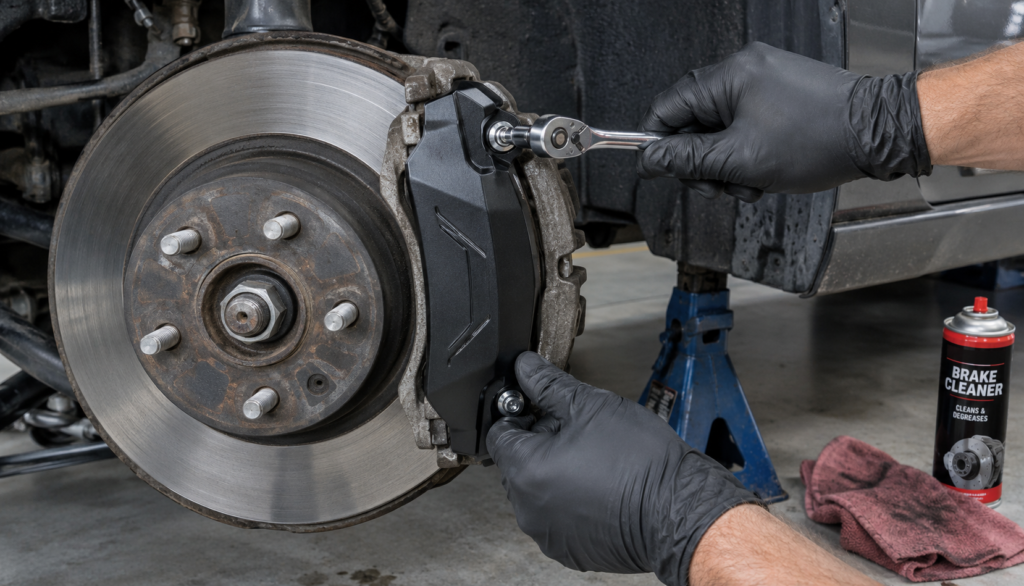
How to install brake caliper covers depends on the kit, but the general installation sequence is the same for most. Always follow the instructions that come with your set.
- Park on level ground, loosen the lug nuts, lift the car, and support it on jack stands. Never work under a car on a jack alone.
- Remove the wheel and let the brakes cool completely.
- Clean the caliper face with brake cleaner to remove brake dust and grease. Do not spray onto the rotor surface while you are working near the pads.
- Dry fit the cover first. Confirm that it clears the rotor, the caliper bolts, and the back of the wheel spokes.
- Attach the cover with its mounting bolts or clips. Tighten them firmly but do not overtighten plastic parts, which can crack.
- Spin the rotor by hand and listen for any scraping.
- Refit the wheel, torque the lug nuts to your owner’s manual spec, and test drive at low speed before normal driving.
Take a short drive and listen for any rattling. Check the covers again after the first few days, because heat cycles can loosen clips and hardware.
What the Warning Light Doesn’t Tell You
Your dashboard will not warn you about anything related to a caliper cover. No sensor monitors it, so problems stay quiet until they become obvious. Here is what a cover can hide or cause that you will not get a light for.
First, covers can block your view during a brake inspection. Checking brake pad thickness often means looking through the wheel spokes or sliding a flashlight behind them. A cover can hide pad wear, a leaking caliper piston seal, or seized caliper slide pins, all of which would normally be visible. If you fit covers, make a habit of removing them for a proper look every time the wheels come off.
Second, a cover can mask the real reason you wanted it in the first place. Rusty, flaking calipers are sometimes a sign of moisture or leaking brake fluid, and a shiny shell over the top will not fix that. If your brake pedal feels soft, the car pulls to one side, or you smell something hot after driving, do not reach for a cosmetic fix.
Third, covers can create their own noises. A clip that works loose can produce a rattling sound that feels exactly like a failing wheel bearing or a loose brake pad shim, and that confusion can waste money on the wrong repair. Finally, a cover has to survive corrosion from road salt. Cheap hardware can seize, which makes removal harder later.
How Much Do Brake Caliper Covers Cost?
The price depends on material, brand, and whether the set includes all four corners. These ranges are typical for the aftermarket, and actual prices vary by seller.
| Type | Typical Price per Set of Four | What You Get |
|---|---|---|
| Cheap caliper covers (ABS plastic) | About $25 to $60 | Basic look, short lifespan, limited sizes |
| Aluminum covers | About $60 to $150 | Better fit, better heat tolerance, longer life |
| Brand-name or custom-fit kits | About $150 and up | Model-specific fitment, higher quality finish |
Are caliper covers worth it? They are worth it if your wheels show the calipers clearly, your car runs on 17-inch wheels or larger, and you want a reversible upgrade. They are not worth it for the cheapest tier if you drive hard, or if your calipers need real repair. A real big brake kit is a completely different product: it replaces the caliper and rotor and costs far more. Fake brake caliper covers do not improve stopping power, so do not buy them expecting performance.
How long do caliper covers last? A decent aluminum cover can last several years if the hardware stays tight. ABS plastic often looks tired within one to three seasons, especially in hot climates or on cars that see regular hard braking.
Also consider the warranty. Because covers are not OEM, a dealer may refuse to cover a brake-related problem if they believe a cover caused or hid it. Keep your receipt, and be ready to remove the covers if you visit the service department.
When to See a Mechanic
You can fit caliper covers yourself if you are comfortable lifting the car safely and removing a wheel. Stop and see a mechanic if any of these apply:
- You hear grinding, scraping, or a constant rattling after installation
- The brake pedal feels soft or goes lower than normal
- The car pulls to one side when braking
- You see brake fluid on the caliper, wheel, or tire
- A cover looks warped, discolored from heat, or has come loose
- Your state inspection requires a clear view of the brakes and the cover blocks it
A shop can also confirm whether a cover is hiding wear. If the pads are thin or a slide pin is stuck, fix the brake first. The cover can go back on afterward.
Frequently Asked Questions
Q. Are brake caliper covers safe?
A. They are safe when they fit correctly, stay tight, and do not trap heat or block inspection. They are not safe if they are loose, contact the rotor, or hide a brake problem you should be looking at.
Q. Can I use brake caliper covers with drum brakes?
A. No. Covers are designed for disc brakes. If your rear axle has drum brakes, you can only fit the front pair, and some sellers will not offer a front-only option.
Q. Do caliper covers need to come off for brake pad checks?
A. Often yes. Many covers block the view of the pads and caliper hardware, so removing them is the only way to do a proper check. It is worth confirming how easily your set comes off before you buy.
Q. Do caliper covers affect braking or cause brake fade?
A. Not by themselves. Fade comes from heat the brakes cannot shed. A cover that blocks airflow around the caliper can add to that, especially if you tow or drive hard, so choose a heat resistant material and a design with open space.
Q. Is it better to paint or cover my calipers?
A. Paint is cheaper and has no clearance issues. Covers are faster and reversible. If your calipers are rusty, clean and paint them or replace them, because a cover only hides the problem.