
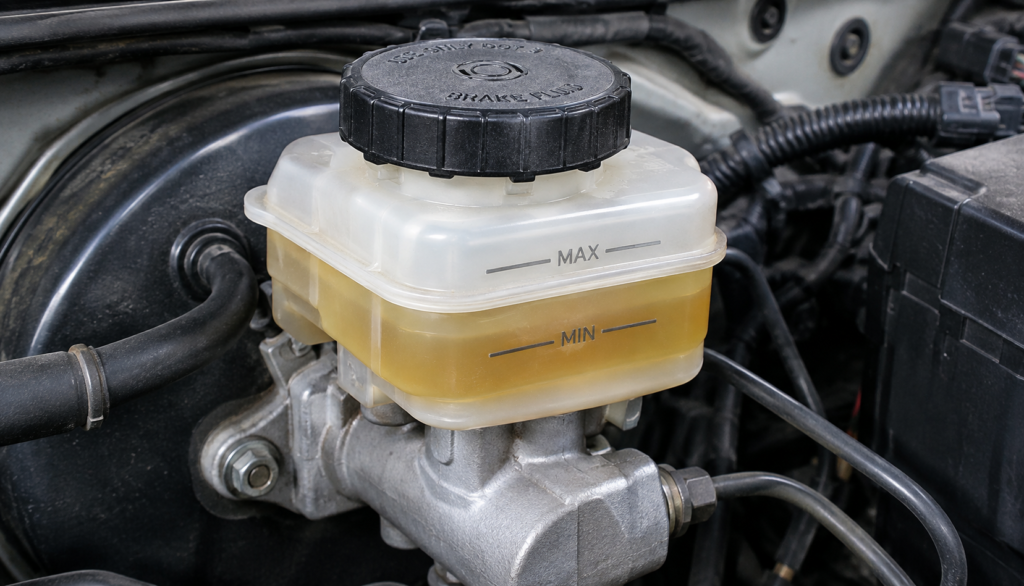
If your brake pedal feels a little softer than usual, or a warning light just came on, checking your brake fluid is one of the fastest ways to rule out a simple problem before it turns into an expensive one. The good news: checking brake fluid takes less than five minutes, requires no tools, and can be done safely from under the hood without touching the hydraulic system itself.
This guide walks through exactly how to check brake fluid level and condition, what you’re looking for, and what it means if something looks off.
What Does Brake Fluid Do?
Before getting into how to check brake fluid, it helps to understand what it’s actually doing. Brake fluid is the hydraulic fluid that transfers the force from your foot on the brake pedal to the brake calipers or wheel cylinders at each wheel. When you press the pedal, brake fluid gets compressed through the brake lines and pushes the pads against the rotors (or shoes against the drums), slowing the car down.
Because this is a sealed hydraulic system, brake fluid needs to stay at the correct level and in good condition for the brakes to respond consistently. Low or contaminated brake fluid can lead to a soft or spongy brake pedal, longer stopping distances, or in more serious cases, reduced braking power.
Where to Find the Brake Fluid Reservoir
The brake fluid reservoir is located in the engine bay, almost always on the driver’s side, mounted on top of the brake master cylinder. It’s usually a translucent plastic container — that translucency is intentional, since it lets you check the fluid level without removing the cap.
A few identifying features to look for:
- A small rectangular or cylindrical container near the firewall, close to the driver’s side
- Usually black, white, or a light-colored translucent plastic
- A cap labeled “Brake Fluid” or marked with a brake warning symbol
- Positioned near (but separate from) the power steering fluid reservoir, which is sometimes mistaken for it
If you’re not sure which reservoir is which, your vehicle owner’s manual will have a diagram of the engine bay showing the exact location.
How to Check Brake Fluid Level
Checking the brake fluid level is the simplest part of this process, and in most vehicles you don’t even need to open the cap:
- Park on level ground and let the engine cool if you’ve just been driving.
- Locate the brake fluid reservoir using the steps above.
- Look at the side of the reservoir for the MIN and MAX lines molded into the plastic.
- Check where the fluid sits relative to those lines. Fluid should sit at or near the max line — it’s normal for the level to drop slightly as brake pads wear down over time.
- If the fluid is at or below the min line, that’s a sign to investigate further rather than simply topping it off.
Because the reservoir is translucent, this whole check can usually be done with a flashlight and without opening the cap, which keeps contaminants and moisture out of the system.
How to Check Brake Fluid Color and Condition
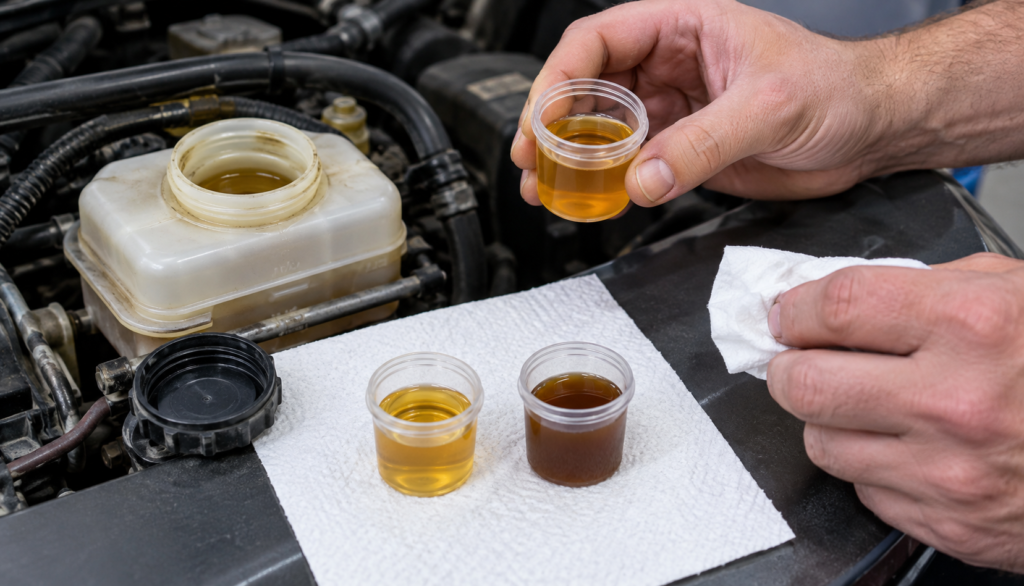
Level isn’t the only thing worth checking — brake fluid color tells you a lot about its condition:
| Brake Fluid Color | What It Means |
|---|---|
| Clear or light amber | Fresh or in good condition |
| Amber to light brown | Aging, but usually still functional — worth monitoring |
| Dark brown or black | Contaminated with moisture or debris — should be inspected/serviced |
| Cloudy or has visible particles | Sign of contamination or reservoir/seal degradation |
Brake fluid darkens naturally over time because it’s hygroscopic, meaning it absorbs moisture from the air. That moisture lowers the fluid’s boiling point, which can reduce brake performance under heavy use, like long descents or repeated hard stops. This is different from an active leak — dark fluid is a gradual condition, not a warning of a sudden failure.
Signs You Should Check Your Brake Fluid
You don’t need to wait for a problem to check your brake fluid, but these signs mean it’s worth doing sooner rather than later:
- The brake warning light is on, on the dashboard
- The brake pedal feels soft, spongy, or sinks closer to the floor than usual
- You notice a puddle or wet spot under the driver’s side of the car
- It’s been longer than a year since the fluid was last inspected
- You’ve recently had brake work done and want to confirm the level was topped off correctly
What the Warning Light Doesn’t Tell You
A brake warning light typically means the fluid level has dropped below the sensor in the reservoir — but it doesn’t tell you why. That’s the part drivers often miss. A slightly low level can be completely normal as brake pads wear (the fluid compensates as the pads thin), but a level that keeps dropping between checks usually means fluid is leaking somewhere in the system, whether at a caliper, a line, or a wheel cylinder.
The mistake to avoid is simply topping off the fluid and moving on when the level is low. If the reservoir needs fluid again within a short period, that’s a sign of a leak, not normal wear, and it means the brake fluid check was flagging a bigger issue than the fluid itself. A quick visual check of the fluid level won’t reveal a slow leak on its own — it just tells you something has changed since the last check.
Checking Brake Fluid vs. Other Fluids Under the Hood
It’s easy to mix up brake fluid with power steering fluid, since both reservoirs sit in the same general area of the engine bay and can look similar. Brake fluid reservoirs are almost always labeled and connect directly to the master cylinder, which sits at the back of the engine bay near the firewall, in line with the brake pedal. Power steering fluid reservoirs are typically located closer to the front of the engine and connect to hoses running toward the steering rack. When in doubt, checking the cap label or the owner’s manual diagram is the fastest way to confirm which reservoir is which before checking any fluid.
How Often to Check Brake Fluid
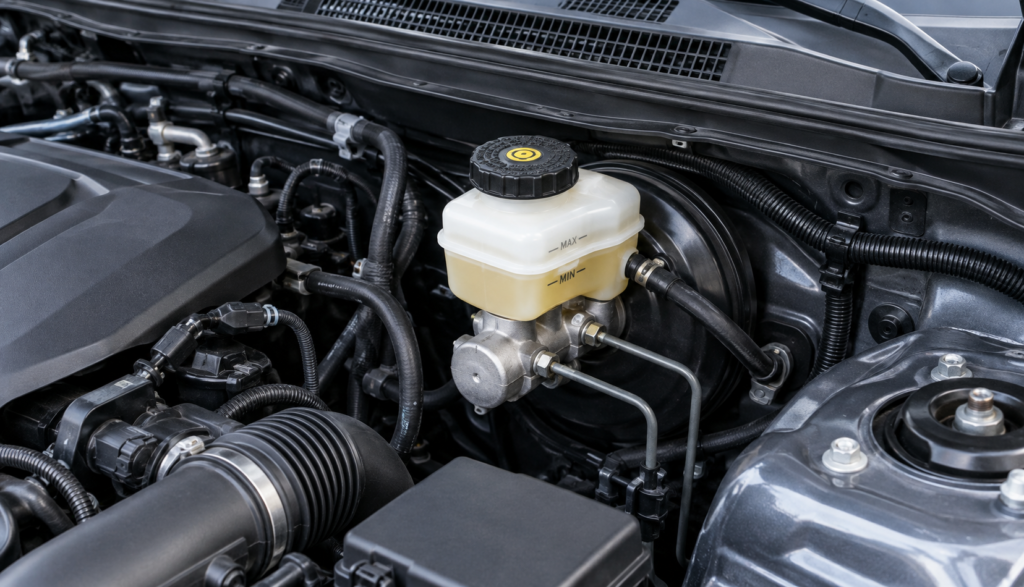
For most daily drivers, checking brake fluid level and color once every few months, or at each oil change, is enough to catch problems early. It’s also worth checking:
- Before a long road trip
- If the brake pedal feel has changed recently
- After any brake repair or pad replacement
- If the brake warning light appears on the dashboard
This is a diagnostic check, not a maintenance task — checking the fluid doesn’t change or replace it. If the check reveals low or discolored fluid, that’s the point where a repair shop or a separate service is needed.
Frequently Asked Questions
Q. Can I check brake fluid without opening the reservoir cap?
A. Yes. In most vehicles, the reservoir is translucent, so you can see the fluid level against the MIN and MAX lines without removing the cap. Opening the cap unnecessarily can let in dust and moisture.
Q. Is it normal for brake fluid to be a little low?
A. A slightly lower level is common as brake pads wear down over time, since the system compensates automatically. It’s only a concern if the level is near or below the minimum line, or if it keeps dropping between checks.
Q. What color should healthy brake fluid be?
A. Healthy brake fluid is typically clear to light amber. As it ages and absorbs moisture, it darkens to brown or black, which is a sign it should be inspected or serviced.
Q. How do I know if it’s brake fluid or power steering fluid low?
A. Check the reservoir cap label first — both are almost always labeled. If unlabeled, the brake fluid reservoir sits directly on top of the brake master cylinder near the firewall, while power steering fluid connects toward the front of the engine near the steering rack.
Q. Do I need any tools to check brake fluid?
A. No. Checking the level and color is a visual check only — no tools are needed, and in most cases you don’t even need to open the reservoir cap.