
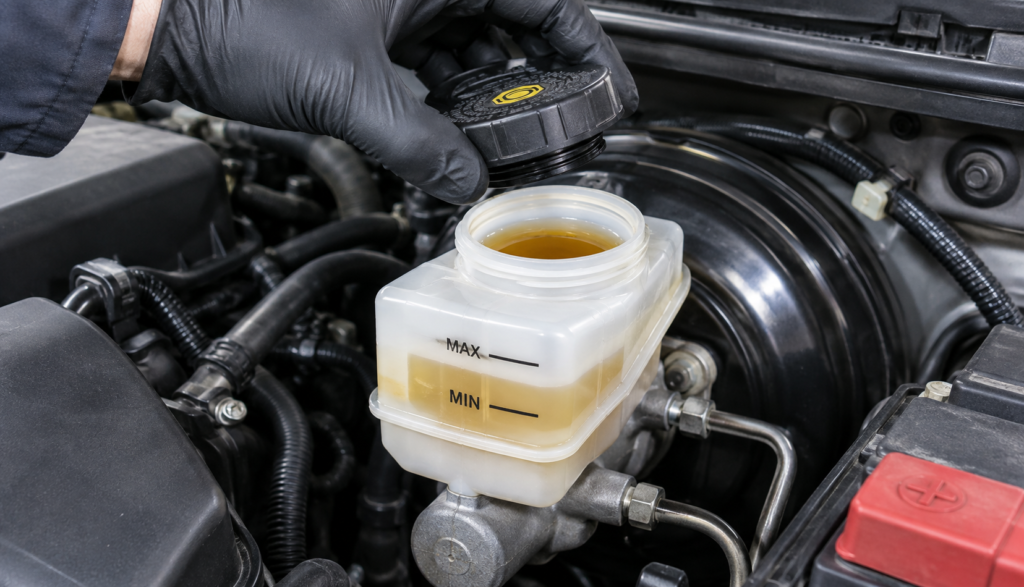
A brake fluid change typically costs between $80 and $150 at most independent shops, while dealerships often charge $100 to $200 depending on your vehicle and location. This service — sometimes called a brake fluid flush or brake fluid exchange — replaces the old, moisture-contaminated fluid in your brake lines with fresh fluid, keeping your braking system responsive and safe.
Unlike an oil change, a brake fluid change isn’t something most drivers think about until a mechanic flags it during an inspection. But brake fluid breaks down over time, and understanding what drives the price up or down can help you avoid overpaying — or skipping a service your car actually needs.
Average Brake Fluid Change Cost by Location
| Service Location | Typical Cost Range |
|---|---|
| Independent mechanic shop | $80 – $150 |
| Dealership service center | $100 – $200 |
| Chain auto service center | $70 – $130 |
| DIY (fluid + tools only) | $15 – $40 |
These ranges reflect a standard brake fluid flush on a typical passenger car. Larger trucks, SUVs, and vehicles with more complex hydraulic systems can push costs toward the higher end.
What’s Included in the Cost
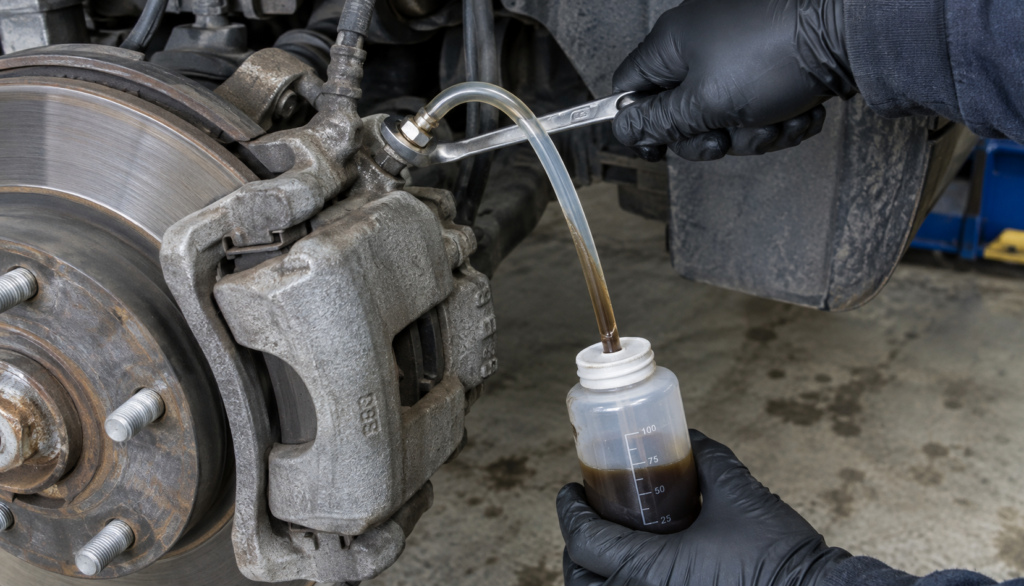
The total price of a brake fluid change usually breaks down into two parts: parts and labor.
- Parts (fluid): $10–$30 for enough DOT 3 or DOT 4 brake fluid to complete a full flush, depending on brand and quantity needed.
- Labor: $50–$120, since the process involves bleeding each brake line individually to remove old fluid and air bubbles.
Shops that charge on the lower end often use a simple gravity-bleed or manual pump method. Higher-end quotes may reflect a pressurized brake fluid exchange machine, which flushes the entire system more thoroughly and reduces the risk of trapped air.
Why Vehicle Make and Model Affects the Price
Luxury and European vehicles — BMW, Mercedes-Benz, Audi — tend to have higher brake fluid change costs, sometimes reaching $150–$250, because they often require specific fluid specifications and, in some cases, electronic reset procedures tied to the ABS module after service. Standard domestic and Japanese vehicles are usually the least expensive to service, since parts and labor rates are more standardized across shops.
Factors That Influence Brake Fluid Change Cost
- Number of brake lines: Four-wheel systems with rear drum brakes may take less time than four-wheel disc setups with more bleed points.
- Fluid type required: DOT 3 is generally cheaper than DOT 4, and DOT 5.1 (used in some performance vehicles) costs more still.
- Labor rates by region: Urban areas and regions with a higher cost of living typically carry higher shop labor rates.
- Flush method: A full pressurized fluid exchange costs more than a basic manual bleed but does a more complete job of removing old fluid.
- Additional repairs found during service: If a mechanic discovers a leak, worn brake line, or corroded fitting while performing the flush, that adds to the final bill.
Brake Fluid Change Cost vs. a Full Brake Job
It’s easy to confuse a brake fluid change with a full brake job, but they’re very different services. A brake fluid change only replaces the fluid inside the existing lines and reservoir. A full brake job — replacing pads, rotors, or calipers — is a separate repair, typically costing $150 to $600 or more per axle. If your mechanic quotes you close to $300+ for what you thought was “just a fluid change,” confirm exactly what’s included before approving the work.
DIY Brake Fluid Change Cost
If you’re comfortable working under the vehicle and have basic tools, a DIY brake fluid change can cost as little as $15–$40 for a quart or two of DOT 3 or DOT 4 fluid, a turkey baster or fluid extractor, and a length of clear tubing for bleeding the lines. This does require some mechanical confidence — bleeding brakes incorrectly can introduce air into the lines, leading to a spongy brake pedal. If you’re unsure about the process, the labor savings may not be worth the risk on a system this safety-critical.
What the Warning Light Doesn’t Tell You
Most vehicles don’t have a dedicated “change your brake fluid” warning light — the brake warning light on your dashboard usually indicates low fluid level, worn pads, or a parking brake issue, not fluid age. This is exactly why brake fluid changes get skipped: there’s no obvious dashboard reminder pushing you toward the service the way there is with an oil change light.
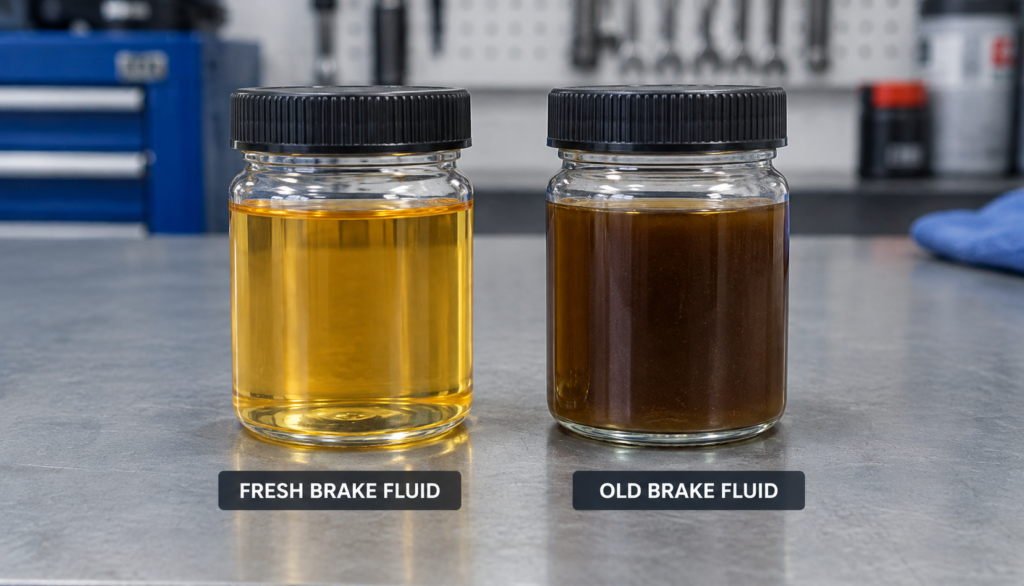
The real signal to watch for is fluid color and moisture content, not a warning light. Fresh brake fluid is light amber or clear; fluid that’s turned dark brown or black has likely absorbed enough moisture to lower its boiling point, which can lead to a soft or spongy pedal feel — especially during hard or repeated braking, like descending a long hill. A cheap fix here (just topping off fluid) doesn’t solve the underlying problem if the existing fluid is already contaminated; topping off dilutes but doesn’t fully replace degraded fluid. If your pedal feels soft, or it’s been more than two to three years since your last flush, that’s a stronger indicator than any dashboard light.
How Often You Should Budget for This Cost
Most manufacturers recommend a brake fluid change every 2 to 3 years, though some vehicles specify mileage-based intervals instead (commonly every 30,000 miles). Because brake fluid is hygroscopic — it absorbs moisture from the air over time, even in a sealed system — it degrades whether or not you’re using your brakes heavily. Budgeting for this every two to three years, rather than waiting for a symptom, is generally cheaper than dealing with corrosion-related repairs to brake lines or the ABS module down the road.
When to See a Mechanic
Schedule a brake fluid change (or have it inspected) if any of the following apply:
- It’s been 2+ years since your last brake fluid service.
- Your brake pedal feels soft, spongy, or sinks closer to the floor than it used to.
- You’ve visually inspected the fluid (via the reservoir) and it looks dark brown or black.
- You’re preparing for a long trip involving mountain driving or heavy braking.
- A mechanic has flagged it during a routine inspection or brake job.
If your pedal feels unsafe or the brake warning light is on alongside a soft pedal, don’t wait for a scheduled appointment — have it checked immediately, since this can indicate a more serious hydraulic issue beyond routine fluid age.
Frequently Asked Questions
Q. Is a brake fluid change the same as a brake flush?
A. Yes, in most shops these terms are used interchangeably. Both refer to removing old fluid from the brake lines and reservoir and replacing it with fresh fluid.
Q. Can I just top off my brake fluid instead of doing a full change?
A. Topping off addresses a low fluid level but doesn’t remove moisture-contaminated fluid already in the lines. If your fluid is old or discolored, a full change is the safer option.
Q. Does brake fluid change cost vary by car brand?
A. Yes. Luxury and European brands often cost more due to specific fluid requirements and, in some cases, electronic system resets tied to the ABS module.
Q. How long does a brake fluid change take?
A. Most shops complete a standard brake fluid flush in 30 to 60 minutes, though a full pressurized exchange or a vehicle with a more complex hydraulic system may take longer.
Q. Will my extended warranty cover a brake fluid change?
A. Most extended warranties treat brake fluid changes as routine maintenance, which is typically excluded from coverage. Check your specific warranty terms to confirm.