
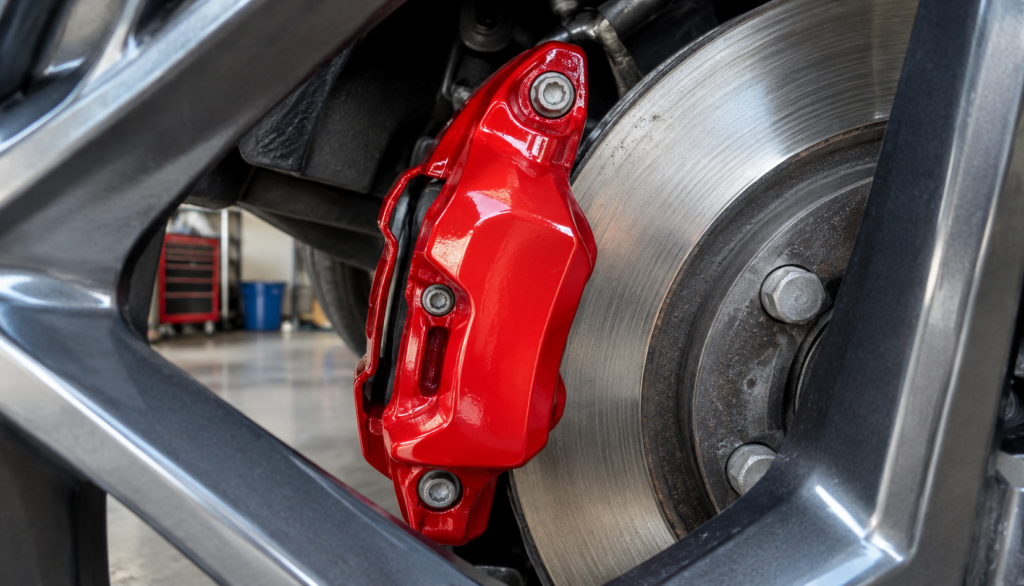
Red brake calipers are one of the most requested cosmetic upgrades car owners search for, usually after spotting them on a performance car or a friend’s freshly detailed wheels. Before you book a shop appointment or order a paint kit, it helps to know what you’re actually paying for, what affects the price, and whether caliper color has anything to do with how your brakes perform. This guide breaks down real cost ranges for DIY and professional painting, what changes the price, and the maintenance side most people don’t think about until the paint starts flaking.
Average Cost to Paint Brake Calipers Red
For most passenger vehicles, painting brake calipers red falls into a fairly predictable range depending on whether you do it yourself or pay a shop.
| Method | Typical Cost (All 4 Calipers) | What’s Included |
|---|---|---|
| DIY caliper paint kit | $15 – $60 | Paint, brush or spray applicator, basic prep supplies |
| Professional caliper painting (shop) | $150 – $400 | Removal, cleaning, masking, application, reassembly |
| Powder coating (shop) | $300 – $700+ | Caliper removal, media blasting, powder coat, curing, reinstall |
| Aftermarket caliper covers (no paint) | $40 – $150 | Bolt-on plastic or aluminum covers, no painting required |
A DIY brake caliper paint kit is by far the cheapest route, but it’s also the one most likely to show early wear if the surface isn’t prepped correctly. Shop-applied paint and powder coating cost more because a technician removes the calipers rather than painting them in place, which produces a cleaner, more durable result.
What Affects Caliper Paint Job Cost
Not every red caliper paint job costs the same. A few factors move the price up or down significantly.
- Vehicle size: Larger calipers on trucks and SUVs need more paint and more labor time than a compact sedan’s calipers.
- Number of calipers painted: Painting just the front two costs less than all four, though most people do all four for a consistent look.
- Condition of the calipers: Rusted or heavily corroded calipers need extra prep work — wire brushing, sanding, or chemical rust removal — which adds labor cost.
- Paint or coating type: A basic high-heat spray paint kit costs far less than a two-part epoxy kit or a professional powder coating job.
- Removal vs. in-place painting: Shops that remove the caliper for a full 360-degree paint job charge more than a quick in-place touch-up.
- Labor rates by region: Shop labor cost varies by location, which shifts the professional caliper painting price up or down.
DIY Caliper Paint Kit vs. Professional Painting
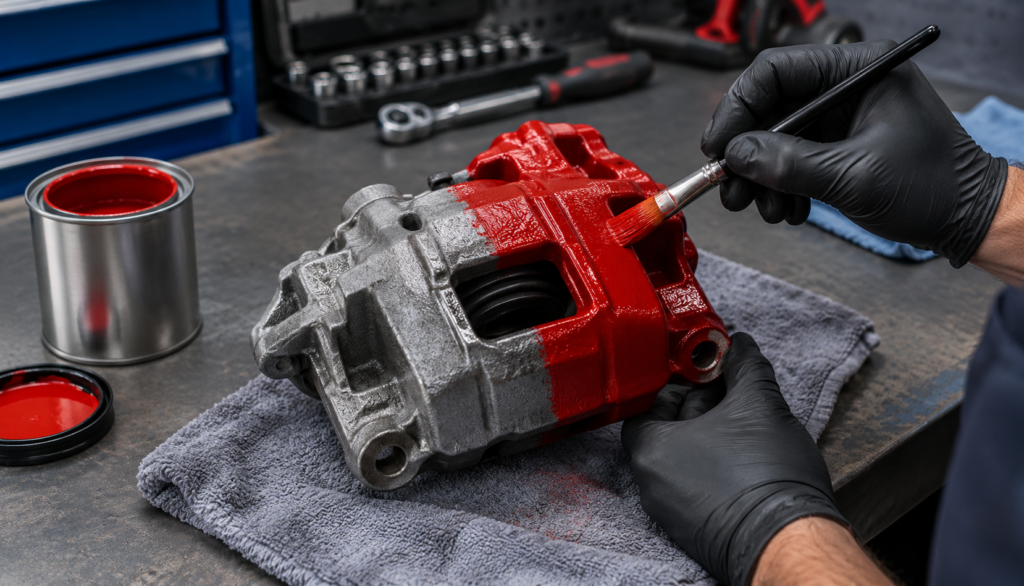
Whether a DIY brake caliper paint job makes sense depends on your comfort level with basic wrench work and how long you want the finish to last.
| Factor | DIY Kit | Professional |
|---|---|---|
| Cost | Low ($15–$60) | Higher ($150–$700+) |
| Time required | 2–4 hours | Usually same-day drop-off |
| Durability | Moderate — depends heavily on prep | High — professional cleaning and curing |
| Finish quality | Good if done carefully | Consistently smooth, factory-like |
| Best for | Budget-conscious owners comfortable with basic tools | Owners wanting a long-lasting, showroom finish |
Most DIY caliper paint kits, including well-known brands like G2 caliper paint, are formulated to handle brake heat without cracking or discoloring — but only if the surface is properly cleaned and free of brake dust, oil, and rust before application. Skipping prep is the single biggest reason DIY caliper paint jobs fail early.
Step-by-Step: How Caliper Paint Is Applied
Whether you’re doing it yourself or just want to understand what a shop is charging you for, the caliper paint process generally follows the same steps.
- Lift the vehicle and remove the wheel to expose the caliper.
- Clean the caliper thoroughly with brake cleaner to remove brake dust, grease, and road grime.
- Sand or wire-brush any rust or peeling paint down to bare metal where needed.
- Mask off the rotor, brake lines, and surrounding suspension parts to protect them from overspray.
- Apply a high-temperature caliper paint or epoxy coating in thin, even coats.
- Allow the recommended cure time before driving — some kits require several hours, others recommend a full 24-hour cure.
- Reinstall the wheel and repeat on the remaining calipers.
Does Caliper Color Affect Brake Performance?
No — painting your calipers red, or any color, is a cosmetic upgrade only. Caliper paint does not change braking power, pad material, rotor performance, or stopping distance. The paint sits on the outer housing of the caliper and has no contact with the internal components that actually generate braking force, like the pistons, pads, and rotor surface.
That said, there are a few safety-adjacent details worth knowing:
- Paint should never be applied to the rotor’s braking surface, the pads, or any part that contacts the rotor — this can affect braking performance.
- High-heat-rated paint is required specifically because calipers can reach several hundred degrees Fahrenheit during hard or repeated braking; standard spray paint will bubble, smoke, or burn off.
- Overspray on the rotor should be cleaned off immediately, as it can cause noise or reduced pad grip until it wears away.
What the Warning Light Doesn’t Tell You
Caliper paint is purely cosmetic, but it can sometimes mask — or get confused with — a functional issue, and that’s the part most guides skip.
- Rust bubbling through fresh paint is a warning sign, not just an eyesore. If red paint starts bubbling or flaking within weeks, it’s often because the caliper had active rust or moisture underneath that wasn’t fully removed before painting. That same rust can eventually affect the caliper slide pins or piston seal, which is a functional problem, not a cosmetic one.
- A caliper that looks fine painted can still be seizing. Paint hides surface condition. A caliper piston that’s sticking or a slide pin that’s dry and binding won’t show any visible symptoms once it’s painted red — but it can cause uneven pad wear, pulling to one side, or a grinding noise down the road. If you notice those symptoms after a caliper paint job, don’t assume the paint caused it; have the caliper function checked separately.
- Fresh paint can delay noticing a leak. Brake fluid leaks around the caliper piston boot are easier to spot on bare metal than on a freshly painted, glossy surface. If you’ve had calipers painted, it’s worth doing a quick visual check for fluid residue at each oil change or tire rotation.
- Powder coating without removal can trap moisture. A rushed in-place paint job that seals over trapped moisture or brake dust can accelerate corrosion under the paint layer, even though the surface looks clean.
The takeaway: caliper paint itself is safe and purely visual, but a paint job is also a good moment to have the caliper’s actual function — pistons, slide pins, and seals — inspected, especially on an older vehicle where rust may already be present.
How Long Does Caliper Paint Last?
A properly prepped and applied caliper paint job typically lasts 2 to 5 years before it needs touch-ups, though this varies by driving conditions and paint quality.
- Heavy brake use (mountain driving, towing, aggressive stop-and-go traffic) generates more heat cycling, which shortens paint life.
- Road salt and winter driving accelerate both paint wear and the corrosion it’s meant to cover.
- Brake dust buildup without regular cleaning can dull the finish and, over time, contribute to peeling at the edges.
- Powder-coated calipers generally outlast spray-painted calipers by a significant margin due to the coating’s bonding process and curing temperature.
Minor touch-ups with a small paint pen or leftover kit paint are usually enough to extend the finish rather than redoing the entire job.
Caliper Paint vs. Caliper Covers
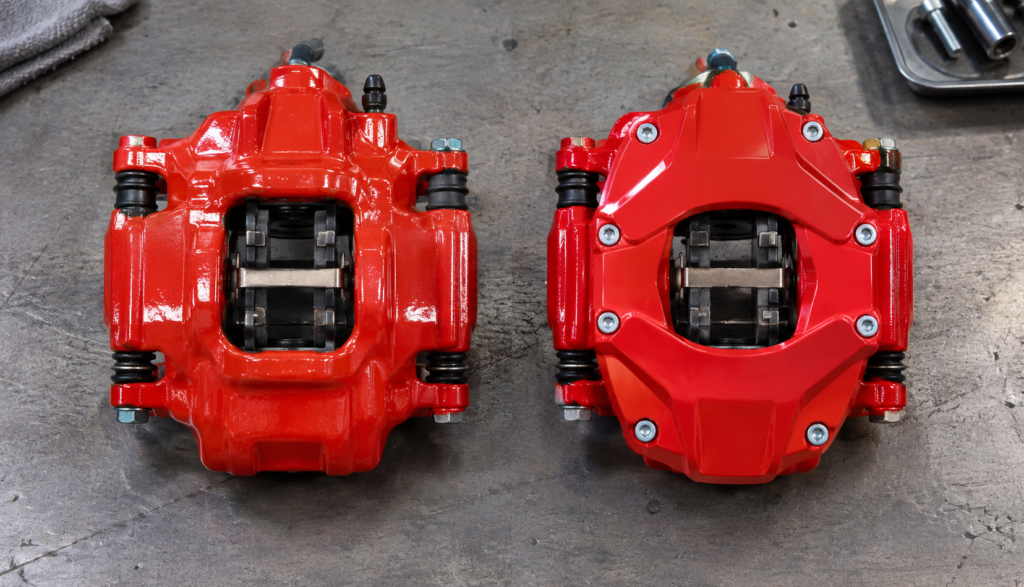
If you want the red caliper look without committing to paint, aftermarket caliper covers are a common alternative.
| Factor | Caliper Paint | Caliper Covers |
|---|---|---|
| Cost | $15–$700+ depending on method | $40–$150 for a set |
| Installation | Requires cleaning, masking, curing | Bolts or clips over existing caliper, no painting |
| Removable/reversible | No — permanent until repainted | Yes — can be removed anytime |
| Covers real caliper | N/A — is the real caliper | Yes — covers the actual caliper housing |
| Heat exposure | Direct — must be heat-rated paint | Covers are heat-resistant but not in constant contact like paint |
Caliper covers are a good option for leased vehicles or anyone who wants a reversible cosmetic change, since they don’t alter the caliper itself.
FAQ
Q: Is it worth paying a professional to paint brake calipers red?
A: If you want a long-lasting, factory-quality finish and don’t want to remove wheels and calipers yourself, professional painting or powder coating is worth the extra cost. For a budget-friendly cosmetic refresh, a quality DIY kit can still look great if the prep work is done properly.
Q: Can I paint brake calipers without removing the wheel?
A: Technically yes, but it’s not recommended. Removing the wheel gives full access for cleaning, sanding, and even coating, which produces a cleaner and more durable result than painting around a mounted wheel.
Q: Does painting calipers red void my car’s warranty?
A: Painting the caliper housing itself typically does not void a standard vehicle warranty, since it doesn’t affect brake function. However, always check your specific manufacturer’s warranty terms, especially on performance or leased vehicles.
Q: What’s the best type of paint for brake calipers?
A: Look for paint specifically labeled as high-temperature or caliper-rated, capable of withstanding at least 500°F. Standard spray paint is not designed for the heat calipers generate and will fail quickly.
Q: Will red caliper paint chip if I hit a pothole or curb?
A: It can. Caliper paint is durable against heat but not immune to physical impact. Curb strikes or debris impact can chip the paint the same way they’d chip a wheel finish, and touch-up paint is the usual fix.