
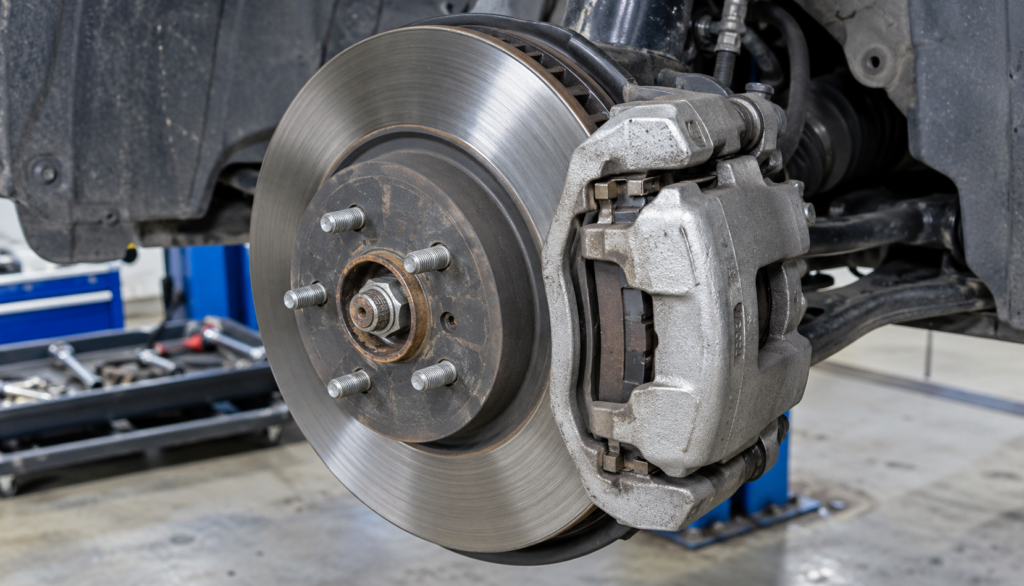
If you’re driving a 2021 Toyota Camry and starting to wonder about the condition of your rotors and brakes, you’re not alone. This is one of the most common maintenance questions Camry owners search for, and for good reason — brake rotors and pads are wear items that don’t last forever, and knowing when to act can save you from a much bigger repair bill down the road. This guide walks through how the 2021 Camry’s brake system is built, how long rotors and pads typically last, the signs that tell you it’s time for service, and what a replacement usually costs.
How the 2021 Camry Brake System Is Set Up
The 2021 Camry uses a standard four-wheel disc brake system, with ventilated front rotors and either solid or ventilated rear rotors depending on trim level (the TRD and V6 models typically have larger rotors and upgraded calipers compared to the base four-cylinder LE and SE trims). Front rotors do more of the stopping work on any front-wheel-drive vehicle, which is why front pads and rotors almost always wear out before the rears.
Camry brake pads are typically a ceramic compound from the factory, chosen for lower dust output and quieter operation compared to semi-metallic pads. The rotors themselves are cast iron, and Toyota specifies a minimum rotor thickness stamped directly onto the rotor hub — this number is what a technician measures against when checking whether a rotor can be resurfaced or must be replaced outright.
How Long Do Camry Rotors and Brake Pads Actually Last?
There’s no single mileage number that applies to every driver, because rotor and pad lifespan depends heavily on driving style, terrain, and how much stop-and-go traffic you deal with daily. That said, here’s a realistic range for a 2021 Camry under normal conditions:
- Front brake pads: 30,000–45,000 miles for average city/highway mixed driving
- Rear brake pads: 45,000–65,000 miles, since rear brakes handle less load
- Front rotors: 50,000–70,000 miles before resurfacing or replacement is needed
- Rear rotors: Often last the life of the vehicle if pads are replaced before they wear down to metal
Highway-heavy commuters tend to land on the higher end of these ranges, while drivers who do a lot of city stop-and-go, mountain driving, or towing will wear through pads and rotors noticeably faster.
Signs Your Camry’s Rotors or Brake Pads Are Wearing Out
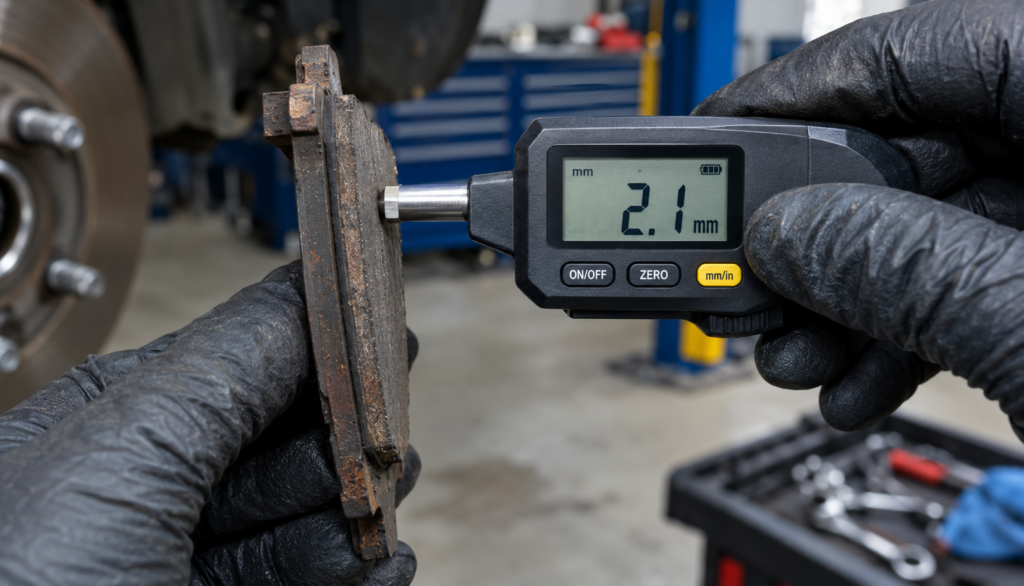
Most brake wear announces itself well before it becomes a safety issue, as long as you know what to listen and feel for.
- High-pitched squealing when braking: This is usually the built-in wear indicator tab making contact with the rotor on purpose — it’s designed to be annoying so you notice it.
- Grinding or metal-on-metal sound: This means the pad material is fully gone and the backing plate is contacting the rotor directly — this is urgent, not optional maintenance.
- Vibration or pulsation in the brake pedal or steering wheel: Usually points to a warped or unevenly worn rotor rather than the pads themselves.
- Longer stopping distances: A gradual increase in the distance it takes to stop is easy to miss because it happens slowly, but it’s a real warning sign.
- Brake pedal feels soft or sinks lower than usual: This can point to worn pads, but can also indicate a fluid or hydraulic issue, which is a separate concern from rotor/pad wear.
Uneven Brake Wear: What It Means
If one side of your Camry’s brakes seems to be wearing faster than the other, or you notice the car pulling slightly to one side when braking, that’s usually a sign of a sticking caliper rather than a rotor or pad defect. A caliper that isn’t releasing fully will keep light pressure on one side’s pad and rotor constantly, accelerating wear and generating extra heat on that corner of the car. This is worth having inspected separately, since replacing pads and rotors without addressing a sticking caliper means the new parts will wear unevenly too.
Can You Replace Brake Pads Without Replacing Rotors?
Yes, in many cases — if the rotors are still above Toyota’s minimum thickness spec and haven’t developed grooves, scoring, or warping, a technician can machine (resurface) them or simply reuse them with new pads. However, once a rotor has been resurfaced once or twice, it may already be close to minimum thickness, at which point replacement becomes the safer option rather than removing more material. A shop should always measure rotor thickness with a micrometer before deciding to reuse, resurface, or replace — guessing based on visual inspection alone isn’t reliable.
What the Warning Light Doesn’t Tell You
Here’s something a lot of owners don’t realize: the 2021 Camry doesn’t have a dedicated “brake pad wear” dashboard light in the way some vehicles do. What you might see instead is the brake system warning light, which is typically triggered by low brake fluid, a parking brake engagement issue, or an ABS-related fault — not routine pad wear. This means you can’t rely on the dashboard to tell you when your pads or rotors are getting thin; the audible squeal and physical inspection are your real indicators.
It’s also worth knowing that a rotor can look fine on the surface while still being under minimum thickness, or can have heat-related warping that isn’t visible without measuring for runout. A “the rotors look okay” visual check from a quick glance is not the same as an actual measurement — if you’re getting a quote based only on a visual inspection, ask whether thickness and runout were actually measured before you agree to reuse the rotors.
2021 Camry Rotor and Brake Pad Replacement Cost
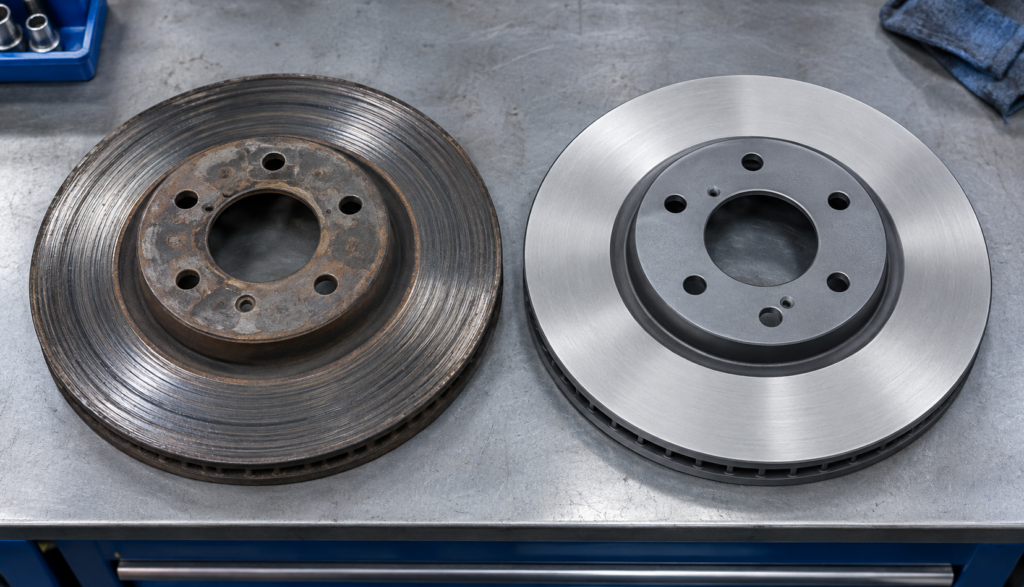
Costs vary by trim, region, and whether you go to a dealership, independent shop, or do it yourself. As general ranges for the 2021 Camry:
| Service | Estimated Cost Range |
|---|---|
| Front brake pads only (per axle) | $120–$220 |
| Rear brake pads only (per axle) | $110–$200 |
| Front rotors and pads (per axle) | $280–$450 |
| Rear rotors and pads (per axle) | $260–$420 |
| All four rotors and pads | $500–$850 |
Dealership pricing typically runs on the higher end of these ranges due to labor rates and OEM parts, while independent shops and quality aftermarket parts can bring the cost down without necessarily sacrificing reliability. DIY replacement, for those comfortable doing it, mainly involves the cost of parts — often $80–$180 per axle for a quality pad-and-rotor kit.
OEM vs. Aftermarket Rotors and Pads for the Camry
OEM (Toyota-branded) rotors and pads are engineered to the exact spec the Camry was designed around, which means predictable performance and fit, but at a higher price point. Quality aftermarket brands can match or come close to OEM performance for considerably less, but quality varies widely — budget aftermarket rotors are more prone to warping and faster wear. If you’re choosing aftermarket, sticking to well-reviewed, reputable brake component brands rather than the cheapest option available tends to avoid repeat trips back to the shop.
When to See a Mechanic vs. When It Can Wait
Squealing alone, without grinding or pedal changes, usually means you have some time to schedule a service appointment rather than needing to act same-day. Grinding, a noticeably soft or sinking pedal, or a burning smell after repeated braking are signs that warrant getting the car looked at as soon as possible — these point to conditions where stopping power is already compromised or close to it.
Frequently Asked Questions
Q. How do I know if my 2021 Camry needs new rotors or just new pads?
A. The clearest way is a thickness measurement from a technician, but grinding noise, visible grooves or scoring on the rotor surface, or pulsation in the brake pedal usually mean the rotors need attention too, not just the pads.
Q. Is it safe to drive with squealing brakes on my Camry?
A. Squealing alone is usually a built-in wear warning and not an immediate safety issue, but it means you should schedule a brake inspection soon rather than waiting for grinding to start.
Q. How much does it cost to replace all four rotors on a 2021 Camry?
A. Expect a range of roughly $500 to $850 for all four rotors and pads, depending on whether you use a dealership, independent shop, or OEM versus aftermarket parts.
Q. Do all 2021 Camry trims have the same brake rotors?
A. No — V6 and TRD trims typically use larger rotors and different caliper setups than the base four-cylinder LE and SE trims, so parts aren’t universally interchangeable across trims.
Q. Can I just resurface my Camry’s rotors instead of replacing them?
A. Yes, if they measure above Toyota’s minimum thickness spec and don’t have significant grooving or warping — a shop should measure this rather than deciding based on appearance alone.