
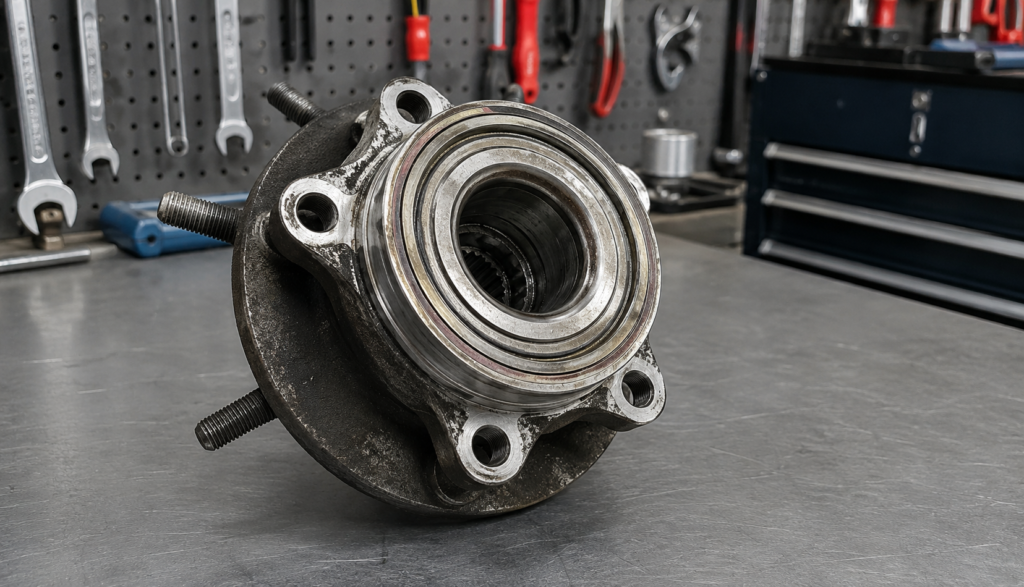
A grinding, humming, or growling noise coming from one of your wheels can point to two very different problems: worn brake components or a failing wheel bearing. Both can sound similar at first, especially at highway speed, which is why so many drivers assume it’s “just the brakes” and end up replacing pads that were never the issue. Telling the two apart isn’t guesswork — there are a few reliable tests you can do from the driver’s seat and a couple more with the car safely jacked up.
Why Brake Noise and Wheel Bearing Noise Get Confused
Both problems live in the same general area — the wheel and hub assembly — so the sound seems to come from the same place no matter which part is actually failing. A worn wheel bearing often produces a low-pitched humming or roaring noise while driving that changes with your speed, while brake noise tends to shift with pedal pressure or happen only when you brake. But wear patterns vary, and a bearing that’s further along in failure can grind loudly enough to sound exactly like metal-on-metal brake contact. Without isolating the variables — speed, steering, and braking — it’s easy to misdiagnose either one.
Key Differences Between Brake Noise and Wheel Bearing Noise
The clearest way to separate the two is to notice when the noise happens, not just what it sounds like.
| Behavior | Points to Brakes | Points to Wheel Bearing |
|---|---|---|
| Noise only when pressing the brake pedal | Yes | No |
| Noise present while driving, brakes untouched | No | Yes |
| Noise changes when turning left vs. right | Rarely | Often |
| Noise gets louder as speed increases | No | Yes |
| High-pitched squeal | Common (wear indicator) | Uncommon |
| Low hum, growl, or roar | Uncommon | Common |
If the noise disappears the moment you take your foot off the brake pedal, you’re almost certainly dealing with a brake issue. If it’s there constantly while the car is moving — regardless of whether you’re braking — a wheel bearing is the more likely culprit.
The Turn Test: A Simple Way to Isolate Wheel Bearing Noise
One of the most useful diagnostic tricks doesn’t require any tools. Find an empty stretch of road or parking lot and gently weave the car left and right at low speed, or take a few wide turns.
- If the noise gets louder when turning away from the noisy side (turning right makes a left-side noise worse), that shifts more load onto the bearing on that side — a classic wheel bearing symptom.
- If the noise stays exactly the same no matter which way you turn, it’s more likely coming from the brakes or another rotating component like a tire or CV joint.
This test isn’t 100% conclusive on its own, but combined with the speed-based behavior above, it narrows things down significantly before you ever need to raise the car.
The Jack-Up Test: Checking for Wheel Bearing Play
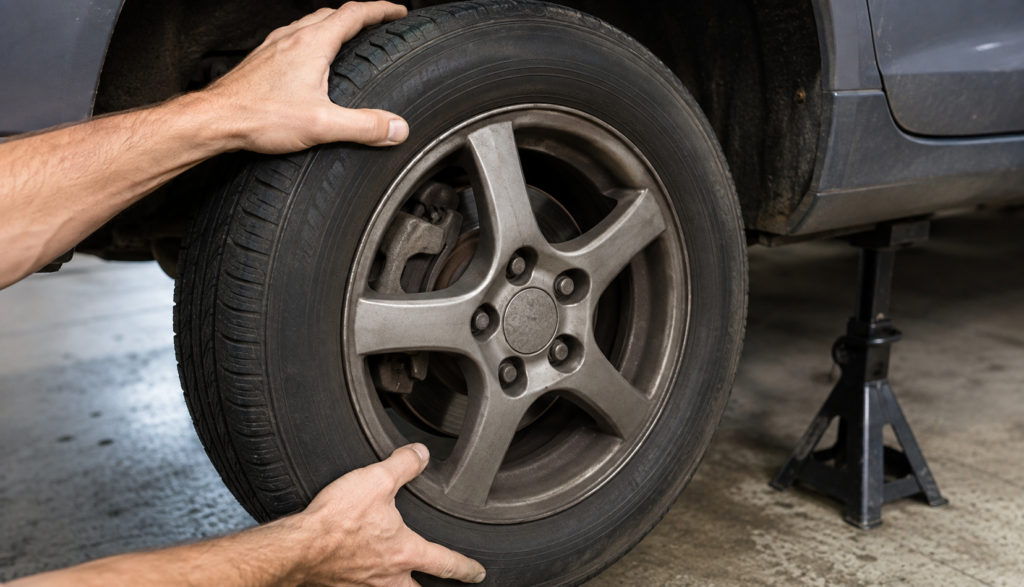
If you have access to a jack and jack stands, you can check for bearing play directly. With the wheel off the ground:
- Grab the tire at the 12 o’clock and 6 o’clock positions (top and bottom) and try to rock it in and out.
- Any noticeable play, clunking, or looseness — beyond a very slight amount — suggests a worn wheel bearing or hub assembly.
- Spin the wheel by hand and listen for grinding or roughness, which can also indicate bearing damage even without noticeable play.
Brake components won’t produce this kind of play. If the wheel feels tight with no wobble and spins smoothly, the noise is more likely coming from the brake pads, rotor, or caliper.
What the Warning Light Doesn’t Tell You
There’s no dashboard light for “worn wheel bearing,” and that’s exactly why this noise gets missed or misdiagnosed for so long. Drivers often replace brake pads first simply because brake wear is the more familiar, more frequently serviced item — and sometimes pads genuinely are worn and need replacing anyway, which muddies the picture further if the real noise source was the bearing all along.
A quick roadside test is also easy to misread. A wheel bearing noise can temporarily seem quieter on a smooth, freshly paved road and then reappear on rougher pavement, making it seem like the problem “came and went” rather than progressed. It didn’t go away — road texture just changes how noticeable it is. Similarly, a mechanic doing a quick visual brake inspection may see pads that still have some life left and conclude the brakes are fine, without necessarily performing the wheel-rock test needed to catch bearing play, especially if bearing noise wasn’t the specific complaint raised.
The bigger risk with letting a wheel bearing issue go undiagnosed as “brake noise” is that a bearing failure is progressive and, in advanced stages, can affect steering control or lead to the wheel separating from the hub. Brake pad wear, by contrast, is a maintenance item that degrades stopping performance gradually but predictably. Neither should be ignored, but a bearing that’s been humming for months deserves more urgency than the noise alone might suggest.
Other Noises That Can Mimic Both
Before assuming it’s brakes or a bearing, rule out a few other common sources that produce similar sounds:
- Worn or unevenly worn tires can create a humming or roaring noise very similar to a bad wheel bearing, especially at highway speed.
- A failing CV joint typically clicks during turns, particularly at low speed — different from the steady hum of a bearing.
- Differential noise (on rear-wheel or all-wheel drive vehicles) can produce a whining or howling noise that changes with acceleration and deceleration rather than steering input.
- Small debris or a stuck pad clip can cause an intermittent brake-area rattle or light grinding that isn’t related to pad wear at all.
If the turn test and jack-up test don’t point clearly to a bearing, and the noise doesn’t correlate with brake pedal use, one of these alternatives is worth ruling out before repairs begin.
Wheel Bearing vs. Brake Repair Cost
Cost is often part of what motivates people to self-diagnose before booking a repair, so it’s worth knowing the general range for each:
| Repair | Typical Cost Range |
|---|---|
| Brake pad replacement (per axle) | $150–$300 |
| Brake rotor + pad replacement (per axle) | $300–$600 |
| Wheel bearing replacement (per wheel) | $250–$500 |
| Wheel bearing + hub assembly (per wheel) | $350–$650 |
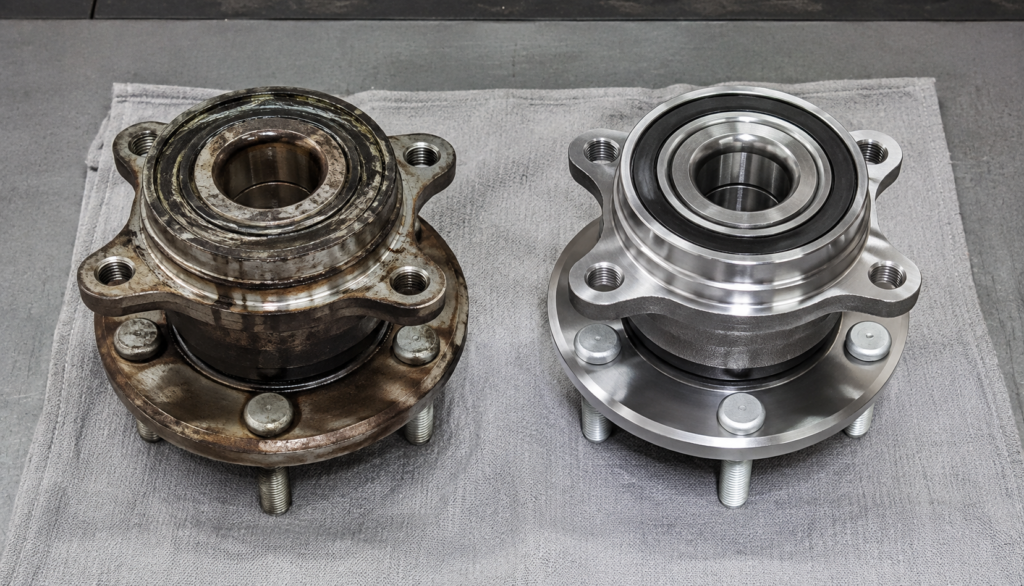
Costs vary by vehicle, labor rates, and whether the bearing is a standalone unit or part of a sealed hub assembly, which is common on many modern vehicles. Getting the diagnosis right matters here — a bearing misdiagnosed as a brake issue means paying for pads or rotors that don’t fix the actual noise, then paying again for the correct repair.
When to See a Mechanic
Self-diagnosis is a useful first step, but certain signs mean it’s time to stop testing and get the car inspected:
- Any noticeable play or wobble found during the jack-up test
- A noise that’s gotten steadily louder over days or weeks
- Steering that feels loose, vague, or pulls to one side
- Grinding that’s present even at low speed or when coasting
- Any vibration through the steering wheel that increases with speed
A qualified mechanic can confirm the source with a lift, a stethoscope test, and a proper bearing play check — tools and access most driveways don’t have. If you’re unsure after the tests above, it’s worth having it looked at rather than guessing further, since a wheel bearing left unaddressed can eventually compromise wheel stability.
FAQ
Q. Can a bad wheel bearing sound exactly like grinding brakes?
A. Yes, especially in advanced stages. That’s why the turn test and jack-up test matter more than sound alone — a badly worn bearing can produce a grinding noise similar to metal-on-metal brake contact.
Q. Is it safe to keep driving with a humming wheel bearing?
A. Short distances at moderate speed are generally low-risk early on, but a wheel bearing failure is progressive. Continuing to drive on it for an extended period increases the risk of steering instability or, in severe cases, wheel separation.
Q. Does wheel bearing noise get louder over time?
A. Yes. Wheel bearing wear is progressive, so the noise typically increases gradually over days, weeks, or months rather than appearing suddenly and staying constant.
Q. Why does the noise change when I turn?
A. Turning shifts weight and load between the left and right wheel bearings. A bearing on the side away from the turn direction often gets loaded more, which makes bearing noise more noticeable during turns — a behavior brake noise doesn’t typically show.
Q. How much does it cost to diagnose whether it’s the brakes or a wheel bearing?
A. Many shops offer a basic inspection for $20–$50, or sometimes free if paired with other service. This is often worth it before authorizing any repair, since a proper bearing play check requires the wheel off the ground.