
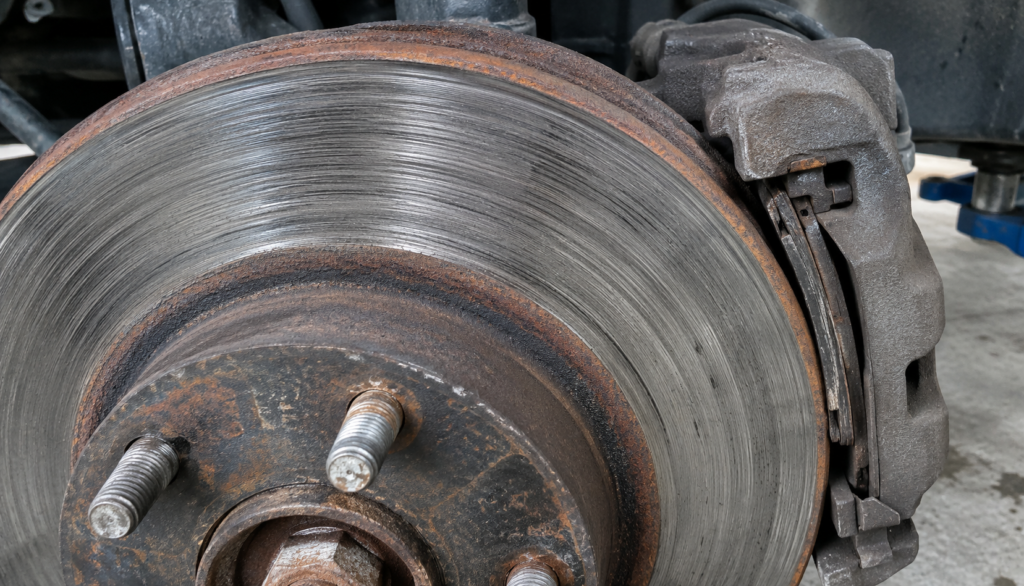
Grinding on brakes every time you press the pedal means something in the braking system is failing. Brakes grinding like this is not a sound to wait out. In most cases it means the brake pads have worn down to the backing plate and metal is now scraping against metal, which chews up the rotors and reduces your stopping power. This guide explains what causes grinding brakes, how to narrow down the problem yourself, whether it is safe to drive, and when it is time to call a mechanic.
What Does a Grinding Noise When Braking Mean?
A healthy brake system is nearly silent. When you press the pedal, the calipers squeeze the brake pads against the spinning rotors, and the friction material on the pads slows the wheel. That material is designed to wear away slowly over tens of thousands of miles, which is why brake pad replacement is a routine maintenance item.
A grinding sound is different from a squeal. It is a rough, low, metallic scraping that you often feel through the brake pedal or the steering wheel as a vibration. Squealing is usually a high-pitched warning, while a grinding noise when braking usually means damage is already happening.
Almost every case of grinding brakes traces back to one of a handful of causes: worn brake pads, damaged rotors, a stuck caliper, debris caught in the brakes, or a problem that only sounds like a brake issue, such as a failing wheel bearing.
Most Common Causes of Grinding Brakes
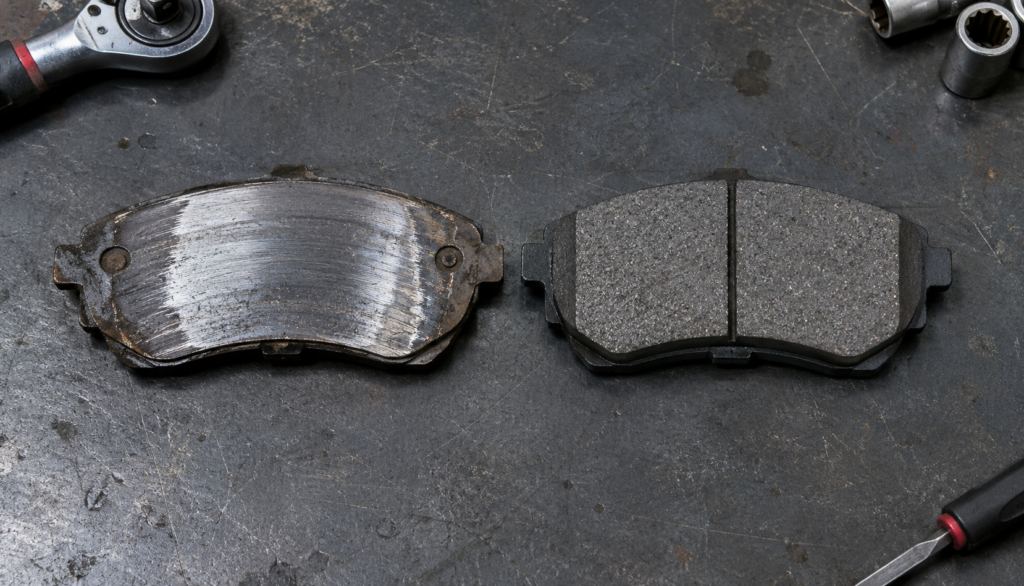
Worn Brake Pads Down to the Backing Plate
This is the number one cause. Once the friction material is gone, the steel backing plate presses directly against the rotor. That metal-on-metal contact produces a loud grinding sound, and it scores deep grooves into the rotor surface. Brake pad thickness is the first thing a technician measures, and anything under about 3 millimeters is considered due for replacement.
Scored or Damaged Brake Rotors
Even after new pads go on, damaged rotors can keep the noise going. Deep grooves, a raised lip around the outer edge, or heavy rust on the rotors all create a rough surface that grinds against fresh pads. Warped rotors can also cause brake pedal vibration along with a scraping noise. Light damage can sometimes be fixed by resurfacing the rotors, but badly worn ones need to be replaced.
A Stuck Brake Caliper
A stuck caliper does not release the pad after you lift off the pedal, so the pad keeps rubbing the rotor while you drive. You may notice a constant grinding sound at low speed, a burning smell, one wheel running much hotter than the others, or the car pulling to one side. A stuck caliper wears out the pads on that wheel quickly and can overheat the brake fluid.
Debris or a Bent Dust Shield
A small stone lodged between the rotor and the brake dust shield can produce a harsh grinding noise that comes and goes. A dust shield that has been bent slightly, often after a tire change or a hit from road debris, can also touch the rotor. This cause is usually cheap to fix, but it is easy to misdiagnose as a serious problem.
Glazed or Low-Quality Brake Pads
Glazed brake pads have a hard, shiny surface caused by overheating or hard stops. They grip poorly and can groan or grind against the rotor. Cheap brake pads with a harsh friction compound can also make noise, especially in the first few weeks, and they tend to wear the rotors faster.
Drum Brakes on the Rear Axle
Many vehicles still use drum brakes on the rear brakes. When the brake lining wears out, the metal shoe grinds against the inside of the drum. Rust or a broken spring inside the drum can cause the same sound, so a grinding noise from the back of the car does not always mean the front brakes are fine.
Grinding Brakes vs. Squealing and Other Brake Noises
Not every brake noise means the same thing. Telling them apart helps you judge how urgent the problem is.
| Sound | Most Likely Cause | Urgency |
|---|---|---|
| Constant metallic grinding | Pads worn to the backing plate | High: stop driving soon |
| High-pitched squeal while braking | Brake wear indicator or glazed pads | Moderate: book an inspection |
| Squeal when the brakes are released | Dry or missing shims and hardware | Low to moderate |
| Grinding when turning | Wheel bearing or bent dust shield | Moderate to high |
| Clunk when you press the pedal | Loose caliper or worn suspension part | High |
| Light scraping after rain | Surface rust on the rotors | Low: usually clears in a few stops |
Is It Safe to Drive With Grinding Brakes?
Short answer: not for long. Once metal is grinding on metal, the stopping distance increases, the rotors take permanent damage, and the heat can cause brake fluid to boil under hard use. A repair that would have cost you a set of pads can turn into pads, rotors, and a caliper.
If the grinding is mild and you must drive, keep the trip short, leave extra following distance, avoid highways, and go straight to a shop. If the pedal feels soft or sinks toward the floor, the car pulls hard to one side, or you smell burning near a wheel, do not keep driving. Have the vehicle towed.
How to Check Why Your Brakes Are Grinding
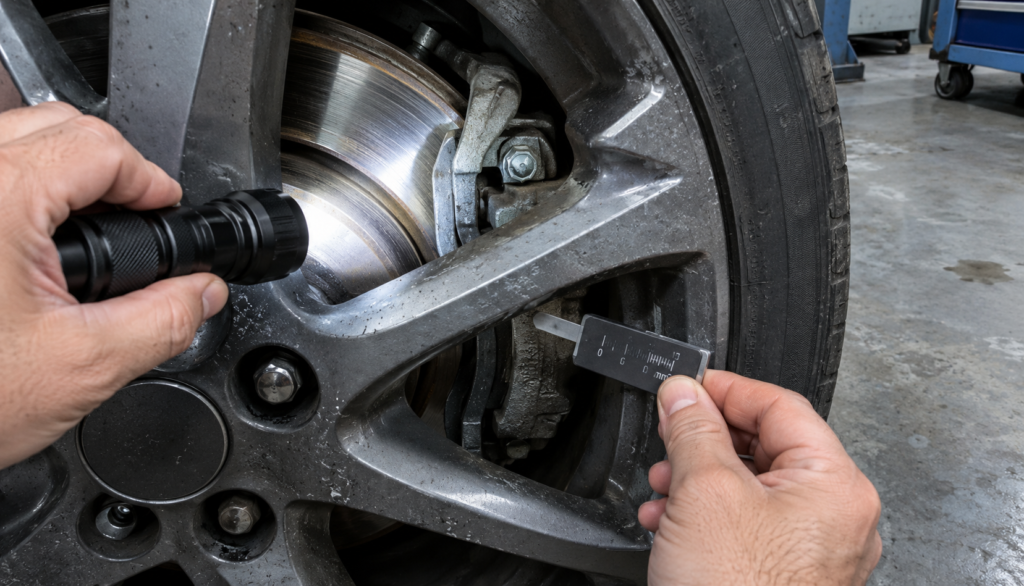
You can gather useful clues in about fifteen minutes with the car parked on level ground and the engine off. This does not replace a professional inspection, but it helps you describe the problem accurately.
- Note when the noise happens: only when braking, all the time, only at low speed, or only when turning.
- Look through the wheel spokes with a flashlight and check the brake pad thickness. If you cannot see any friction material, the pads are finished.
- Inspect the rotor surface for deep grooves, a lip on the outer edge, or heavy rust.
- Compare the front brakes and the rear brakes, since one axle often wears faster than the other.
- After a short drive, carefully feel the heat near each wheel. A wheel that is much hotter than the others suggests a stuck caliper.
- Spin each wheel by hand with the car safely supported and listen for a scrape from a dust shield or rough sound from a bearing.
Never work under a car supported only by a jack, and loosen the lug nuts only while the wheel is on the ground. If anything looks unsafe, stop and let a technician take over.
When Grinding on Brakes Is Normal
Sometimes the noise is harmless. Rotors rust quickly overnight or after rain, and the first few stops of the day can produce a light scraping sound that fades once the pads wipe the surface clean. New pads also need a short bedding-in period, and some make faint noise until they settle.
The rule of thumb: if the sound disappears within a few stops, it is probably surface rust. If it stays, gets louder, or you feel it in the pedal, treat it as a real problem.
What the Warning Light Doesn’t Tell You
Many drivers assume the dashboard will warn them before brakes wear out. Often it will not.
- Most cars have no dedicated brake pad warning light. The usual warning is a small metal tab that squeals, and once it wears through, the squeal stops, so the quiet can be misleading.
- Cars that do have wear sensors often monitor only one wheel, so the other three can be worn without any light.
- The ABS light is a separate system. A dark dashboard does not mean the pads and rotors are healthy.
- Grinding when turning can come from a wheel bearing rather than the brakes, and a bearing failure is a different, sometimes more serious, repair.
- A quick DIY test can mislead you. If the noise goes away after a few hard stops, that does not mean the problem is solved; it can mean rust cleared but the pads underneath are still thin.
- A cheap fix and a bigger problem can sound identical. A pebble in the dust shield and a stuck caliper both produce grinding, but only one of them damages other parts if ignored.
How Grinding Brakes Are Fixed
The repair depends on what the inspection finds. Typical outcomes look like this.
| Cause | Typical Fix |
|---|---|
| Worn pads, rotors still good | Replace brake pads |
| Worn pads and scored rotors | Full brake job: pads and rotors |
| Stuck caliper | Replace or rebuild caliper, plus pads and brake fluid service |
| Debris or bent dust shield | Remove debris or straighten the shield |
| Worn rear brake lining on drums | Replace brake shoes and inspect the drums |
Costs vary by vehicle, parts quality, and local labor rates, so ask for a written estimate that separates parts from labor.
When to See a Mechanic
Book a brake inspection right away if you notice any of the following:
- A grinding noise that does not go away after a few stops
- Vibration in the brake pedal or steering wheel
- The car pulling to one side when you brake
- A soft or low pedal
- A burning smell or visible smoke near a wheel
- Longer stopping distances than normal
A professional brake repair starts with a measured inspection of the pads, rotors, calipers, and fluid, so you only pay for what actually needs replacing.
Frequently Asked Questions
Q. Why do my brakes grind when I stop at low speed?
A. Low-speed grinding is most often worn pads or rusty, scored rotors. At low speed there is less road noise to hide the sound, so the scraping is easier to hear. A stuck caliper can also produce a constant grinding sound at low speed.
Q. Can I keep driving if my brakes are grinding?
A. Only for a short, careful trip to a shop. Grinding brakes mean reduced stopping power and fast-growing damage. If the pedal feels soft or the car pulls, have it towed.
Q. Will new brake pads stop the grinding?
A. Only if the rotors are in good shape. If the old pads wore down to metal, the rotors are usually scored, and new pads on damaged rotors can keep grinding or wear out early.
Q. Why are my brakes grinding after replacing the pads?
A. Common reasons are rotors that were not resurfaced or replaced, debris trapped during installation, missing shims or hardware, or low-quality pads that need time to bed in. If it continues after a week of normal driving, go back to the shop.
Q. How long can brake pads last before they start grinding?
A. Most pads last 30,000 to 70,000 miles depending on driving style, vehicle weight, and pad material. City driving with frequent stops wears them faster than steady highway miles.