
A squeaking noise while driving is annoying enough on its own, but it is even more confusing when it has nothing to do with the brakes. You press the pedal and the sound stays the same, or it only shows up when you are cruising, turning, or rolling over a rough patch. That detail matters, because it rules out the most obvious suspect and points you toward the belt, the bearings, the suspension, or the steering.
This guide walks through the most common reasons a car squeaks when the brakes are not applied, how to tell them apart by sound and timing, what each repair typically costs, and when it is still safe to drive. Use it to narrow things down before you call a mechanic, so you can describe the problem clearly instead of just saying “it squeaks.”
What a Squeaking Noise While Driving Usually Means
A squeak is a high-pitched sound caused by two surfaces rubbing or by rubber slipping against metal. On a moving car, that almost always comes from something that rotates, flexes, or pivots. The four big groups are the serpentine belt and its pulleys, the wheel bearing and hub, the suspension, and the steering system.
The timing of the noise is your best clue. A squeal that rises and falls with engine RPM is usually under the hood. A squeak that follows road speed, whether you are accelerating or coasting, is usually at a wheel. A squeak that only happens over bumps is almost always the suspension. A squeak that appears only while turning the wheel points to the steering or the front suspension.
Serpentine Belt Squeal and a Worn Belt Tensioner
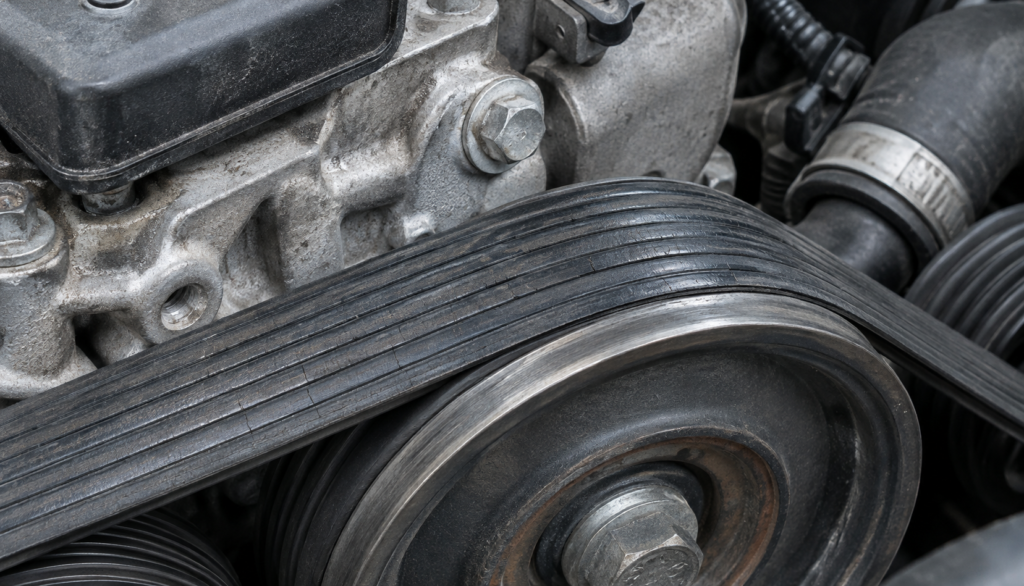
The serpentine belt runs the alternator, water pump, power steering pump, and air conditioning compressor on most cars. When the belt glazes, cracks, or loses tension, it slips on the pulley and makes a sharp squeal. This is the single most common reason for a squeaking noise at low speed or right after a cold start, and it changes pitch with engine speed rather than road speed.
The belt itself is not always the culprit. A weak belt tensioner lets the belt go slack, and a dry or failing idler pulley can squeak on its own even with a healthy belt. If you can hear the sound with the car parked and the engine at idle, rev it gently. A squeal that climbs with the revs is a strong sign of a belt-side problem rather than a wheel or suspension problem.
Some drivers reach for belt dressing, a sticky spray that quiets the noise for a few days. It is a temporary patch at best, and it can hide a worn belt that really needs to be replaced. If the belt shows cracks across its ribs, fraying, or a shiny glazed surface, replace it instead of masking the sound.
Humidity plays a role too. A squeak in wet weather that fades once the engine warms up is a classic early warning that the rubber is aging and the tensioner pulley is losing its grip.
Wheel Bearing and Hub Problems
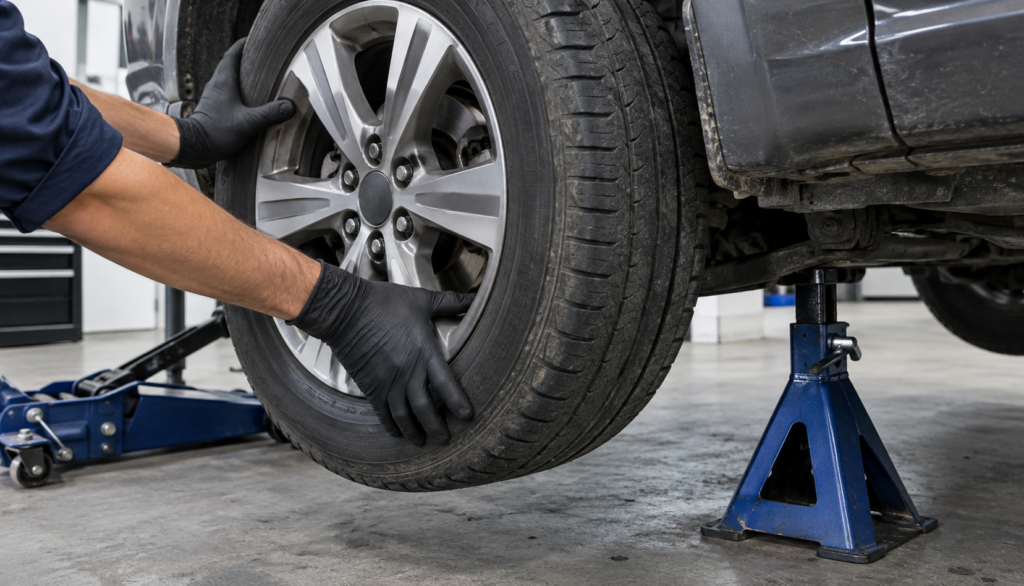
A failing wheel bearing often starts as a faint squeak or chirp before it becomes a hum or growl. Because the bearing spins with the wheel, the noise follows your speed and usually gets louder as you go faster. It may also change when you steer gently left or right, since the load shifts from one side of the car to the other.
The key difference from a brake noise is that the sound is present while you are cruising and does not change when you press the pedal. A bad bearing can also bring a slight vibration through the floor or the steering wheel, and in advanced cases a grinding feel. If you notice a growl that gets worse with speed, treat it as urgent, because a bearing that seizes can lock the wheel or let it separate from the hub.
Suspension Bushings, Ball Joints, and Sway Bar Links
If you hear a squeaking noise when driving over bumps, driveway entrances, or speed humps, look at the suspension first. The suspension is full of rubber and metal pivot points, and each one can dry out and complain.
- Suspension bushings: Rubber sleeves in the control arm and other mounts crack and harden over time, creating a rubbery squeak or creak as the car rocks.
- Ball joints: A dry ball joint makes a creaky, squeaky sound when the front end moves up and down or when you turn.
- Sway bar links: Worn sway bar links usually clunk, but dry ones can squeak over uneven roads.
- Shocks and struts: Worn shocks and struts can squeak at the top, especially when the strut mount or its bearing dries out.
A quick spray of rubber-safe lubricant or silicone grease on a bushing can quiet it for a while, which actually helps confirm the source. It is not a permanent fix if the rubber is already cracked or torn.
Brake Parts That Squeak Even When You Are Not Braking
Just because you are not pressing the pedal does not mean the brakes are completely off the hook. Several brake components can squeak while the car is simply rolling.
- Brake pad wear indicator: The small metal tab on worn brake pads can brush the rotor continuously and chirp at certain speeds, even with your foot off the pedal.
- Brake dust shield: A thin metal plate behind the rotor can bend slightly and scrape, producing a light, steady squeal that rises with wheel speed.
- Sticking brake caliper: A caliper that does not fully release keeps the pads lightly pressed against the rotor, which can squeak and also cause one wheel to run hotter than the others.
- Rotor rust: After rain or a few days of sitting, surface rust on the rotor can squeak for the first few minutes of driving. If it goes away quickly, it is normal.
If the noise is steady and the wheel on one side smells hot or looks darker with brake dust, a dragging caliper is a real possibility and should be inspected soon.
Steering and Power Steering Squeaks
A squeaking noise when turning, especially at parking speeds, often comes from the steering system. Low power steering fluid lets the pump whine or squeal when you turn the wheel to full lock. Check the reservoir level and the fluid color. Dark, foamy, or low fluid suggests a leak or a worn pump.
The steering rack, tie rod ends, and the top strut bearings can also squeak when they dry out. A noise that appears only as you turn, and disappears when the wheel is straight, usually lives in this area rather than in the belt or the wheel bearing.
Squeaks That Change With Speed, Temperature, or Weather
Pay attention to when the sound happens, because the pattern tells the story:
- Only when accelerating: A squeaking noise when accelerating often points to the belt slipping under load or a worn engine mount. It can also be a drive-axle or CV joint dry spot.
- Squeak only when cold: A noise that fades after a few minutes usually means the belt rubber or a bushing is stiff and warms up as it gets used.
- At idle and low speed: A sound present at idle is under the hood. A sound that appears only once the car is moving is at a wheel or in the suspension.
- Constant, speed-dependent chirp: Often a bearing, a bent dust shield, or a rubbing tire.
Do not forget the simplest cause. A loose plastic wheel well liner or a tire rubbing against it can sound like a squeak at speed, especially after hitting a pothole or a curb.
What the Warning Light Doesn’t Tell You
Most squeaking problems never turn on a single dashboard warning light, and that is exactly the trap. The car looks fine on the instrument panel while a part quietly wears out.
Here is what to watch for beyond the lights:
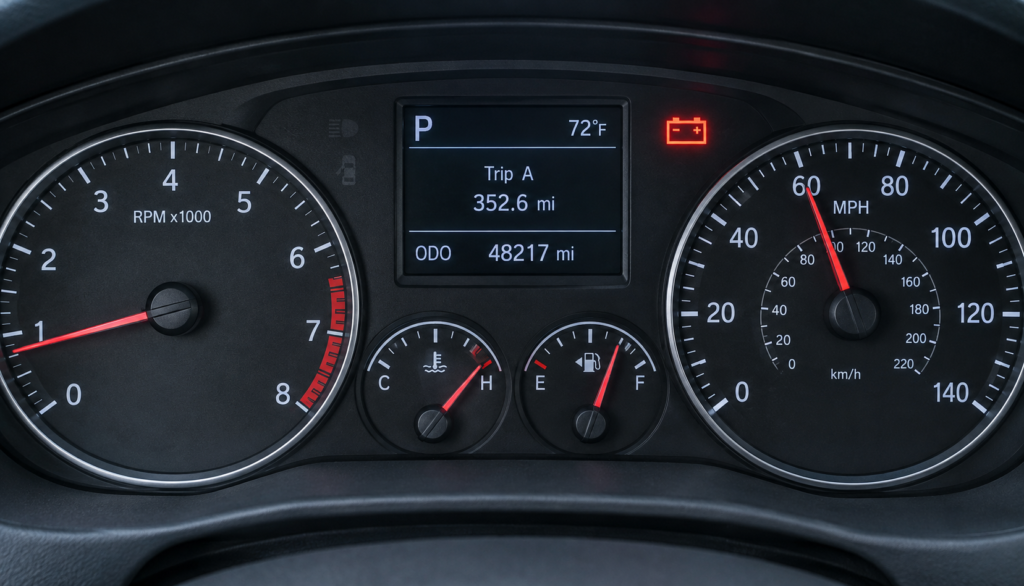
- A squeal plus a battery light: If the battery light flickers on while the belt squeals, the belt may be slipping on the alternator pulley, which means the battery is not charging properly. This can leave you stranded.
- A squeal plus a rising temperature gauge: A slipping belt can stop turning the water pump, which stops coolant circulation and can overheat the engine quickly. Pull over if the gauge climbs.
- A bearing noise inside the alternator or water pump: A failing alternator bearing or a water pump bearing can squeak long before it throws a light. The noise sounds like a belt squeal but does not go away with a new belt.
- A cheap fix hiding a bigger problem: Lubricating a bushing or spraying a belt can silence the noise and leave a worn part in place. If the squeak comes back, treat it as a real wear item instead of a nuisance.
The takeaway is simple: no light does not mean no problem. If the squeak is new, persistent, or changing, it deserves a proper inspection.
How to Find the Source Safely
You can narrow things down without special tools if you stay safe:
- Park on level ground, set the parking brake, and open the hood with the engine off. Look at the belt for cracks, glazing, and fraying.
- Start the engine and listen at idle. If the squeal is there, rev the engine gently and note whether it follows the revs.
- Turn the steering wheel from side to side while parked. A noise that appears here points to the steering or the front suspension.
- Take a short drive in an empty lot and note whether the squeak follows speed, bumps, or turns.
- If you need to look at a wheel, lift the car with a proper jack and support it on jack stands. Never work under a car held only by a jack. Spin the wheel by hand and listen for rubbing or roughness.
This kind of inspection will not replace a professional diagnosis, but it gives a mechanic a head start and keeps you from guessing.
Repair Cost and When to See a Mechanic
Costs vary by vehicle and region, but these are typical ranges for common causes of a squeaking noise while driving:
| Cause | Typical Repair Cost | Urgency |
|---|---|---|
| Serpentine belt replacement | $100 – $250 | Moderate |
| Belt tensioner or idler pulley | $150 – $400 | Moderate |
| Wheel bearing replacement (per wheel) | $250 – $700 | High |
| Suspension bushings | $150 – $500 | Low to moderate |
| Ball joint replacement | $200 – $550 | High |
| Sway bar links | $100 – $250 | Low |
| Bent brake dust shield | $0 – $100 | Low |
| Sticking brake caliper | $250 – $600 | High |
| Power steering fluid service or leak fix | $100 – $400 | Moderate |
| Alternator or water pump | $400 – $900 | High |
Get a mechanic to look at it quickly if the noise is accompanied by a grinding sound, a vibration you can feel, a battery light, an overheating gauge, a burning smell, or any change in how the car steers. Those signs mean a part is worn badly enough that continuing to drive could cause a breakdown or a safety problem. A faint squeak that goes away once the engine warms up is usually fine to drive on for a short time, but it should still be checked at your next service.
Frequently Asked Questions
Q. Why is my car squeaking while driving but not when I brake?
A. The noise is most likely coming from the serpentine belt, a wheel bearing, the suspension, or the steering. If the sound changes with engine speed, look at the belt and pulleys. If it changes with road speed or bumps, look at the bearing and suspension.
Q. Is it safe to drive with a squeaking noise?
A. A short, faint squeak that goes away when the car warms up is usually not an emergency. A loud, constant, or worsening squeak, especially with grinding, vibration, a battery light, or overheating, is not safe to ignore, and you should have the car inspected promptly.
Q. Why does my car squeak when I turn the steering wheel?
A. Low or worn power steering fluid, a dry ball joint, a worn strut mount, or a dry steering component are the usual causes. Check the fluid first, then have the front suspension inspected if the squeak continues.
Q. Will spraying lubricant stop the squeak for good?
A. Usually not. Lubricant on a bushing or belt dressing on a belt can quiet the noise temporarily and help you find the source, but if the part is cracked, glazed, or worn, it still needs to be replaced.
Q. How much does it cost to fix a squeaking noise while driving?
A. It depends on the cause. A bent dust shield may cost almost nothing, a serpentine belt usually runs $100 to $250, and a wheel bearing or alternator can cost several hundred dollars or more.