
You start the car, pull out of the driveway, and a small amber “ABS” symbol glows on the dashboard. The ABS braking light is one of the most common warning lights drivers run into, and it is also one of the most misunderstood. Some people ignore it for months. Others panic and assume the brakes are about to fail. The truth sits in the middle: your car will almost always stop, but a key safety feature has switched itself off, and you should find out why.
This guide explains what the ABS light means, the most common causes, what each repair typically costs, and when it is time to see a mechanic. If you want a quick answer, here it is: the most likely culprit is a failed wheel speed sensor, followed by a blown ABS fuse, low brake fluid, or a problem with the ABS module.
What the ABS Light Means
ABS stands for anti-lock braking system. Its job is simple: when you stomp on the brake pedal on a wet, icy, or loose surface, the system prevents wheel lock-up by rapidly pulsing the brakes many times per second. That pulsing lets the tires keep traction so you can still steer while you slow down. Without it, a locked wheel turns into a skid, your stopping distance grows, and you lose control.
Every time you turn the ignition on, the system runs a quick self-test. The ABS light flashes on for a second or two and then goes out. If the light stays lit, the control module found a fault in the system and has disabled anti-lock braking to be safe. Your regular brakes still work, because the ABS runs on top of the normal hydraulic brake system rather than replacing it. What you lose is the safety net during hard stops and emergency braking.
Check the light’s color and wording first. An amber ABS light points to the anti-lock system itself. A red light that says “BRAKE” is a different warning light and usually means low fluid, a stuck parking brake, or a more serious hydraulic problem. Your owner’s manual shows exactly which symbols your car uses.
Is It Safe to Drive With the ABS Light On?
In most cases you can drive with the ABS light on for a short time, such as getting home or to a repair shop, as long as the brake pedal feels normal. The car will brake the way an older vehicle without ABS would. That means you need to leave more space, brake earlier, and be careful on slippery roads, where the missing anti-lock function matters most.
Do not keep driving normally for weeks. If another issue develops, such as low brake fluid or a failing pump, a small problem can grow into an expensive one. Also, if the pedal feels soft, sinks toward the floor, or the red brake light is on too, stop safely and have the car towed. A full guide on how long you can drive with the ABS light on is coming in a separate article.
Most Common Causes of an ABS Light
The anti-lock system depends on sensors, wiring, fluid, and a control module all working together. A fault in any one part can trigger the light. These are the causes mechanics see most often, roughly from most to least common.
Faulty Wheel Speed Sensor
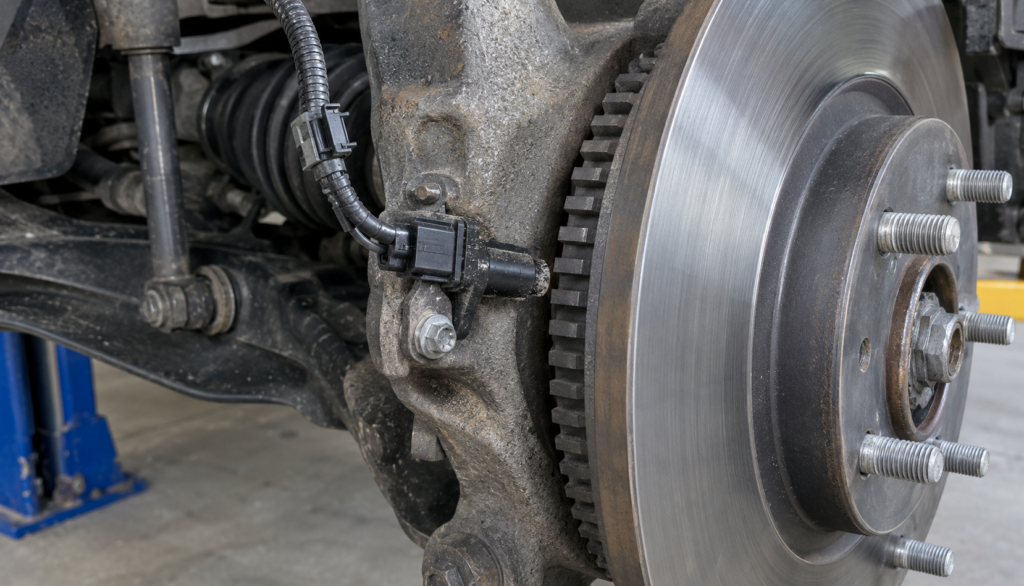
Each wheel has a wheel speed sensor that tells the control module how fast it is turning. If one sensor fails, gets coated in brake dust and road grime, or loses its signal, the module cannot tell whether a wheel is about to lock up and shuts the system down. This is the single most common reason the ABS light turns on. The sensor sits near the hub, exposed to water, road salt, corrosion, and debris, so it takes a beating over the years.
Blown ABS Fuse or Electrical Fault
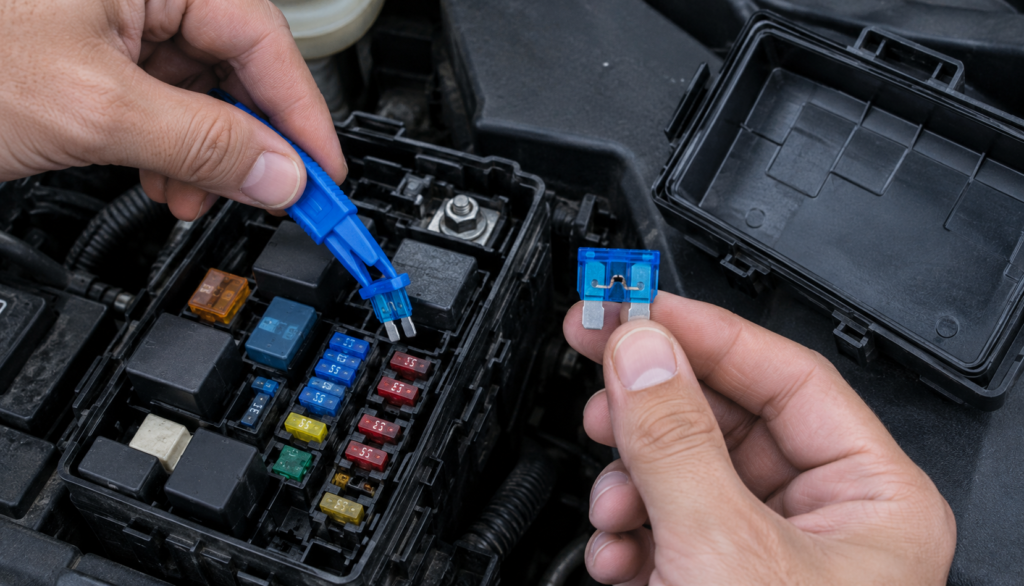
The anti-lock system has its own protection in the fuse box, often a high-amp fuse for the pump and a smaller one for the module. A blown ABS fuse is cheap and easy to check. Just remember that fuses rarely blow without a reason, so if a new fuse blows again quickly, there is a short somewhere in the wiring. Corroded connectors and chafed wiring near the wheels cause similar trouble and are a very common electrical fault in cars from snowy, salted regions.
Low Brake Fluid
Many cars tie the ABS light to the brake fluid reservoir. When the brake fluid level drops below the minimum mark, the system may disable ABS and turn on the light. Low brake fluid is usually caused by worn brake pads, which pull more fluid into the calipers as they thin out, or by a leak. Either way, a low reservoir is a clue worth following, not just topping off.
Failing ABS Module or ABS Pump
The ABS module is the computer that reads the sensors and controls the hydraulic unit. Inside that unit sits the ABS pump and a set of valves. Internal electronics can fail, valves can stick, and the pump motor can burn out. This is the least common cause but the most expensive one, which is why it should be ruled out last, after the cheaper sensors, fuses, and wiring have been checked.
Damaged Tone Ring or Worn Hub Bearing
The sensor reads a toothed ring that spins with the wheel, called a tone ring or reluctor ring, which is mounted on the axle or built into the brake rotor on some cars. If that ring is cracked, rusted, or packed with debris, the signal becomes erratic. A worn hub bearing can also let the ring wobble away from the sensor and cause intermittent faults. A humming or growling noise that rises with speed alongside the ABS light often points here.
What the Warning Light Doesn’t Tell You
The light itself is a blunt tool. It says “something is wrong with the anti-lock system” and nothing more. Here is what it hides.
- The cheap fix and the expensive fix look identical. A dirty sensor that needs a ten-minute cleaning and a dead ABS module that needs a four-figure repair turn on the exact same light. Never assume the worst before a proper diagnostic scan.
- Several systems share the same sensors. Stability control and the traction control light rely on the same wheel speed data. When the ABS has a fault, you will often see those lights come on too. That is normal and does not mean three separate failures.
- Clearing the light does not fix the fault. Disconnecting the battery or using a cheap tool to reset the ABS light may turn it off for a day, but if the fault is real, the system will detect it again and the light will return.
- Worn brake pads can be the hidden trigger. Because thin pads lower the fluid in the reservoir, what looks like an ABS problem can actually be a brake maintenance problem.
- A weak battery can fake a fault. The module is sensitive to low battery voltage. A tired battery or a loose terminal can set an ABS code that disappears once the battery is replaced.
- Mismatched tires matter. Mixing tire sizes or running one badly worn tire changes how fast that wheel spins, and some cars read this as a sensor disagreement.
- Your car may fail inspection. In many places an illuminated ABS light is an automatic failure, so ignoring it can cost you time and a retest fee.
ABS Light Patterns: Stays On, Comes On and Off, or Shows Up With Other Lights
How the light behaves gives you real clues, even without a tool.
The ABS Light Stays On After Starting
If the light stays on after starting the engine and never goes out, the module has stored a hard fault. This usually means a failed sensor, a blown fuse, or a dead module. It is the most common pattern and the one a scan tool can read easily.
The ABS Light Comes On and Off
When the light comes on and off, the fault is intermittent. Loose connectors, corroded wiring, a marginal sensor that only fails when hot or wet, or a weak battery are the usual suspects. Intermittent problems are annoying, but they are often cheaper to fix than a light that is permanently on, and they deserve attention before they become permanent.
ABS Light and Brake Light On Together
If you see the ABS light and brake light on together, treat it more seriously. That combination can mean a hydraulic problem, a failing proportioning function, or very low fluid, and it can reduce braking performance more than a lone ABS light would. Stop driving and have it inspected. This pairing will get its own dedicated guide.
How to Check the Cause Before You Visit a Mechanic
A few simple checks can save you a diagnostic fee or at least make your conversation with the shop more productive.
- Check the brake fluid level. Open the hood and look at the reservoir. If the fluid sits below the minimum line, note it and mention it to the mechanic. Do not just top it off and forget it.
- Find the fuse box. Use your owner’s manual to find the ABS fuses and check whether either is blown.
- Inspect each wheel area. Look for damaged wiring, a loose connector, or heavy debris around the sensor and hub.
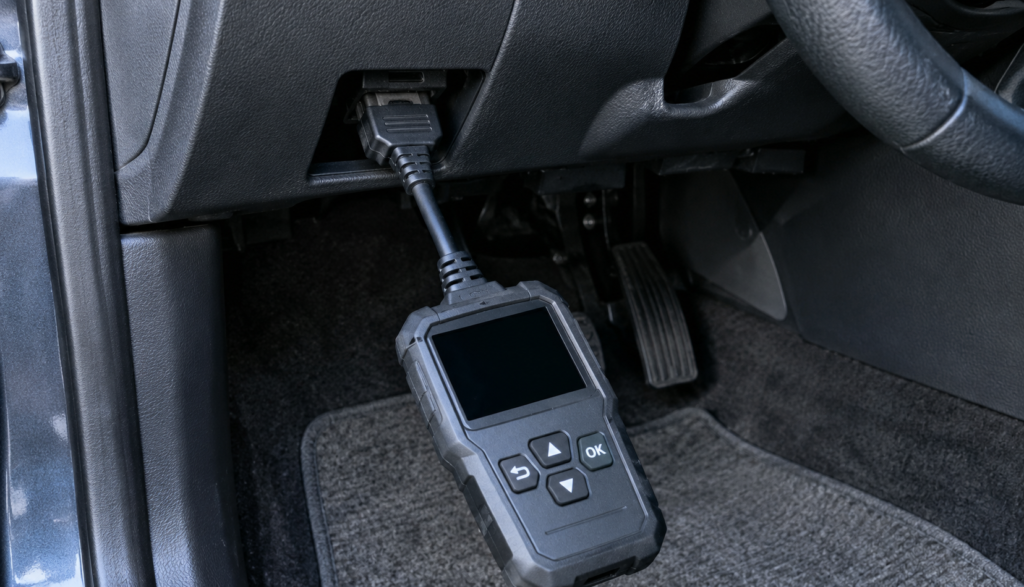
- Plug in a code reader. A basic OBD-II scanner may not read ABS codes, but many affordable models do. ABS trouble codes typically begin with “C” and point to the specific circuit or wheel that is faulty.
- Test the battery. Confirm the battery is healthy and the terminals are tight and clean.
If none of these turns up an obvious cause, the next step is a proper diagnostic scan that reads the ABS module directly. That is what a mechanic’s scan tool does and what a cheap generic reader often cannot.
ABS Repair Cost by Cause
Prices vary by vehicle and region, but these ranges give you a realistic idea of what to expect, including parts and labor.
| Cause | Typical Repair Cost | Difficulty |
|---|---|---|
| Blown ABS fuse | $5 to $30 | Easy |
| Sensor cleaning or connector repair | $50 to $150 | Easy to moderate |
| Wheel speed sensor replacement | $150 to $400 per wheel | Moderate |
| Brake fluid top-off or flush | $80 to $150 | Easy |
| Tone ring or hub bearing replacement | $250 to $700 | Moderate to hard |
| ABS pump or module replacement | $500 to $1,800 or more | Hard |
The ABS sensor replacement cost is usually the number most owners end up paying, and it stays well below a full module job. Because the ABS module replacement cost can be high, many shops offer repairing or rebuilding the unit as a cheaper alternative to a new one. Detailed pricing for each repair will be covered in separate cost guides.
When to See a Mechanic
Book a shop visit soon if any of these apply:
- The ABS light stays on and a basic check shows no obvious cause.
- The light returns after a fuse change or battery disconnect.
- The brake pedal feels soft, spongy, or sinks slowly.
- You notice a grinding noise, pulling to one side, or longer stopping distance.
- Both the ABS light and the red brake warning light are on.
- You see fluid under the car near a wheel.
Stop driving and arrange a tow if the pedal goes to the floor, the car pulls hard under braking, or the red light is on with a soft pedal. Everything else is a repair you should schedule promptly, not an emergency, as long as you drive carefully and leave extra stopping room in the meantime.
Frequently Asked Questions
Q. Can I drive with the ABS light on?
A. Usually yes, for a short trip, because the regular brakes still work. Expect longer stopping distances on wet or icy roads and get it checked soon. If the red brake light is also on or the pedal feels soft, do not drive it.
Q. Why did my ABS light come on after a battery change or low battery?
A. The module is sensitive to voltage. A weak battery, a loose terminal, or a battery disconnect can set a temporary fault code. If the light stays on after the battery is healthy, a real fault is likely.
Q. Will the ABS light turn off by itself?
A. Sometimes, if the fault was intermittent, such as a muddy sensor or a loose connection. A real failure will not clear on its own, and an intermittent one usually returns.
Q. How much does it cost to fix an ABS light?
A. It depends on the cause. A fuse costs a few dollars, a wheel speed sensor usually runs $150 to $400, and a failed ABS module can cost over $1,000.
Q. Will an ABS light fail an inspection?
A. In many regions, yes. An illuminated ABS warning light is often treated as a safety defect, so repair it before your test.